
By Xpert Packages Team · · Updated
Perfume Box Design: Inserts, Finishes and Luxury Touches
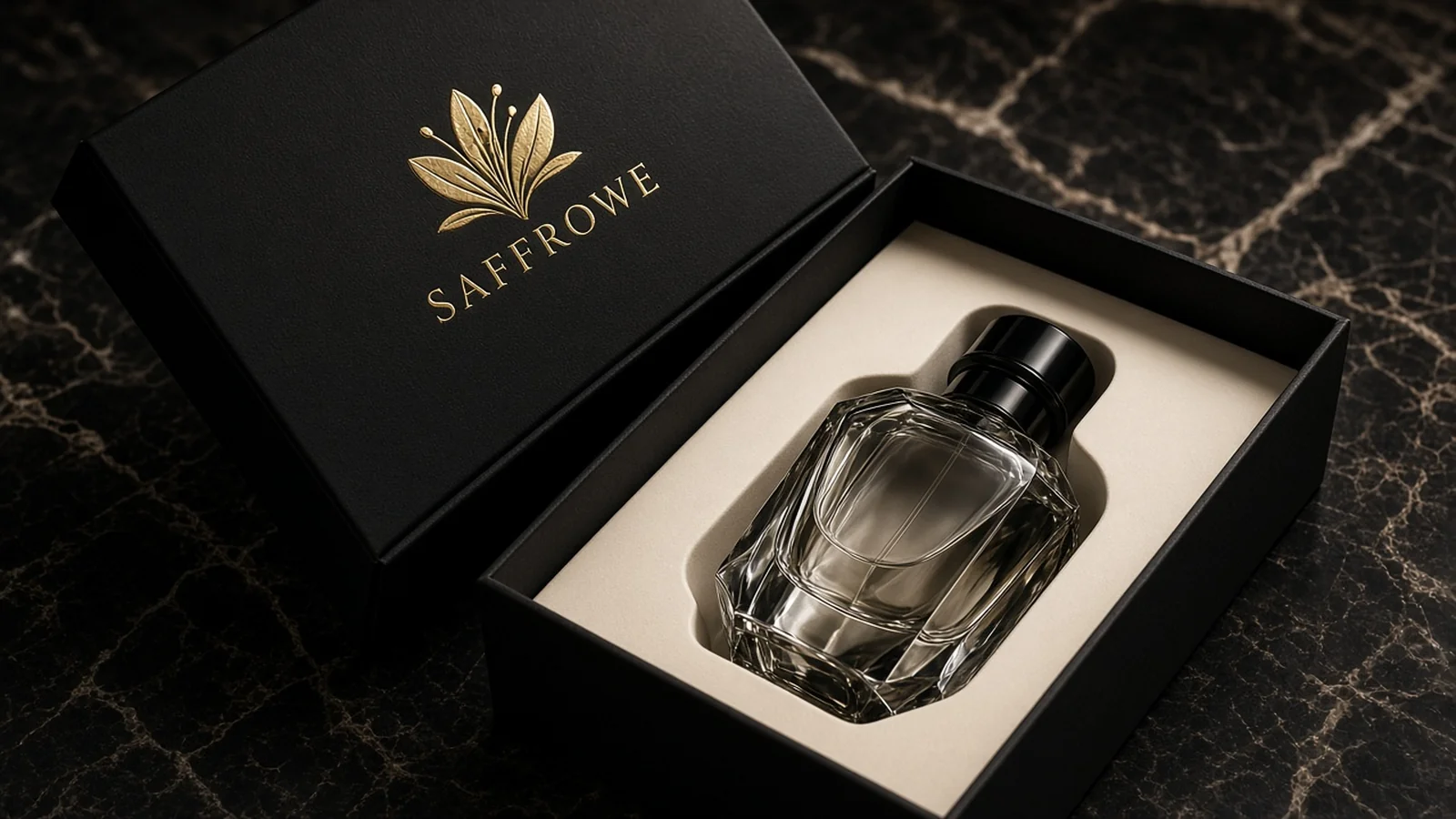
Which box style suits a perfume?
Custom perfume boxes protect a fragile bottle and set the scent's mood before it is sprayed. This guide covers styles, inserts, finishes and design tips.
| Style | Feel | Best for | Pricing |
|---|---|---|---|
| Tuck end carton | Light, retail-ready | Everyday and travel sizes | Quoted per spec |
| Sleeve and tray | Layered reveal | Mid-range and gift sets | Quoted per spec |
| Rigid lid and base | Solid, premium | Prestige scents | Price on quote |
| Magnetic box | Luxury, book-style | Flagship and gift editions | Price on quote |
See rigid vs magnetic vs folding gift box styles for more.
Why does the insert matter most?
Glass breaks. An insert cut to the bottle shape stops movement, protects the cap and centers the bottle for a better reveal. Paperboard inserts are common in cartons; thicker inserts suit rigid boxes. Every box and insert is made to your exact size, so measure the bottle and cap carefully.
Which finishes create a luxury feel?
- Soft-touch for a velvety surface.
- Foil in gold, silver or a color for the name.
- Embossing to raise the logo.
- Spot UV for a gloss pattern on a matte base.
- Matte, gloss, varnish or aqueous coating for the overall surface.
Print can be offset, with optional PMS spot color for a signature brand color, digital for short runs, or screen printing for bold, simple graphics. Read packaging finishes explained.
What design tips work for perfume boxes?
- Let one color carry the scent's mood.
- Keep the name large and centered.
- Use one luxury effect strongly, not five weakly.
- Repeat the bottle shape or a motif on the box.
- Plan a gift edition in a rigid or magnetic box.
Perfume often sits within a wider beauty line; see custom cosmetic boxes and custom gift boxes.
How do you design a perfume box step by step?
- Measure the bottle and cap. Record height, width and depth at the widest points, including the cap and any collar. Every box is made to your exact size. See how to measure box dimensions.
- Choose the style. A folding carton suits retail testers and gift-with-purchase sizes. A rigid or magnetic box suits flagship scents and gift sets.
- Choose the insert. Paperboard inserts suit folding cartons; foam or board inserts suit rigid boxes. The bottle should sit still when the box is shaken gently.
- Set the mood with color. Match the box to the scent family: deep tones for evening scents, pale or fresh tones for light, daytime scents.
- Pick one or two luxury touches. For example, a soft-touch surface with a foil logo, or an embossed name with spot UV.
- Write the text. Scent name, size, brand and any required information. Keep the front panel uncluttered.
- Review the proof and approve. Check foil and spot UV areas, dieline and spelling. Production takes 7–14 business days.
How do perfume box styles compare?
| Factor | Folding carton | Rigid box | Magnetic box |
|---|---|---|---|
| Feel | Light and crisp | Solid and heavy | Solid, with a satisfying close |
| Protection for glass | Good with an insert | Very good with an insert | Very good with an insert |
| Storage | Ships and stores flat | Arrives assembled | Arrives assembled |
| Best use | Retail, testers, minis | Gift sets, keepsakes | Flagship launches, premium gifting |
| Pricing | Listed on product pages | Priced on quote | Priced on quote |
Which finish pairs work well on perfume boxes?
- Soft-touch with gold or silver foil. A velvety surface with a bright, metallic logo.
- Matte with spot UV. A gloss pattern or name catches the light against a flat background.
- Embossing with varnish. A raised brand mark you can feel, with a subtle sheen.
- Gloss with a deep color. Rich, saturated color suits bold, modern scents.
- Kraft with a single foil. A natural base with one premium detail for niche or artisan brands.
Read matte vs gloss vs soft-touch lamination to compare the base finishes.
Which mistakes should you avoid with perfume packaging?
- A loose insert. Glass that moves can chip, and a rattle feels cheap.
- Too many effects. Foil, spot UV, embossing and a pattern all at once compete with the bottle.
- Small, low-contrast type. The scent name should read clearly on a shelf.
- Ignoring the cap. Tall or shaped caps need extra height in the box and the insert.
- Approving without checking color. If your brand color matters, ask for PMS spot color matching.
Perfume box checklist
- Bottle and cap measured at the widest points.
- Style chosen for how the scent is sold: retail, gift or online.
- Insert specified and holding the bottle still.
- One or two finishes chosen, with areas marked on the artwork.
- Text proofread, and the proof approved.
How should a perfume box open?
The opening is part of the experience. A folding carton with a tuck end is quick and familiar. A lid-and-base rigid box creates a slow lift as air escapes. A magnetic flap gives a soft click when it closes, and a drawer box slides out to reveal the bottle. Choose the opening that matches how you want the customer to feel: quick and practical for everyday scents, slower and more ceremonial for gifts and signature launches.
Can one box design work for several scents?
Yes. Many brands use one structure and insert for every bottle in a collection, then change only the color, scent name or foil. This keeps the range consistent on a shelf and makes reorders simpler. Digital printing suits collections with many variants in short runs, while offset printing with optional PMS spot color suits larger runs where each scent has an exact signature shade.
What text belongs on a perfume box?
Keep the front for the brand and scent name. Use the back and side panels for the size, a short scent description, ingredients and any information your market requires. A short line about the scent's notes helps shoppers choose without opening the box. Proofread every panel before approving, because text errors are the most common reason for a reprint.
How do you plan a perfume box, step by step?
Perfume boxes protect glass and set the tone before the bottle is seen. Planning in order keeps both jobs covered.
- Measure the bottle and cap. Include the widest point and full height. Every box is made to your exact size.
- Choose protection. Decide whether the bottle needs an insert, such as a paperboard cut-out, to stop movement.
- Choose the structure. A folding carton suits retail shelves; a sturdier style suits gift sets and premium editions.
- Set the look. Pick a base finish (matte, gloss or soft-touch) and one highlight, like foil, embossing or spot UV.
- Check the text. Make sure name, size and required details are clear and not hidden by effects.
- Approve a proof. Then allow 7–14 business days for production.
| Design goal | Options to consider |
|---|---|
| Quiet luxury | Soft-touch with a single foil logo |
| Bold and modern | Gloss with strong color and spot UV |
| Natural feel | Kraft board with soy inks and an aqueous coating |
| Collector edition | Embossing on the name plus a matching insert |
Common mistakes: a loose bottle with no insert, fine foil text that does not register cleanly, and mixing too many effects on one panel. Minimum 50 units, runs of 50–249 quoted individually, so a limited edition can be tested in a smaller run.
How do I request a quote?
Share bottle size, style and finishes. Request a quote — minimum 50 units, runs of 50–249 quoted individually, 7–14 business days. Start your quote.
Frequently asked questions
- What is the best box for perfume?
- A folding carton for everyday sizes; rigid or magnetic for premium and gift editions.
- Do perfume boxes need inserts?
- Yes, an insert keeps the glass bottle from moving.
- Which finish feels most luxurious?
- Soft-touch with a foil or embossed logo is a classic choice.
- Can I order a small test run?
- Yes. Minimum 50 units, runs of 50–249 quoted individually.
- How long does production take?
- 7–14 business days.
About the author: Xpert Packages Team
Xpert Packages is a custom packaging solutions provider serving businesses across retail, eCommerce, food, cosmetics and other industries. Our team writes these guides from the box styles, materials and finishes in our own catalog.