
By Xpert Packages Team · · Updated
Are Custom Printed Boxes Worth It? Costs, Value and MOQs
What drives the cost of custom printed boxes?
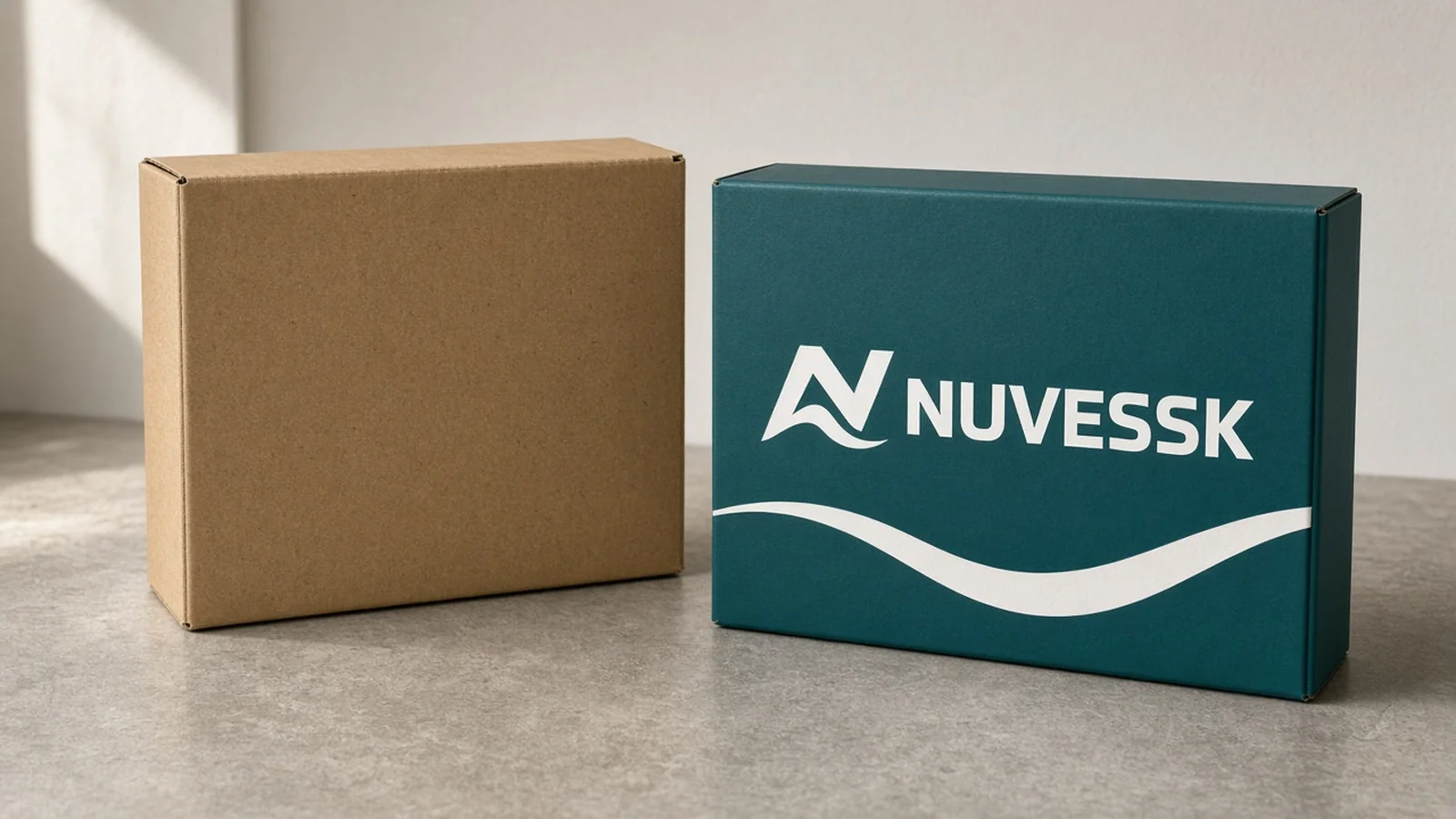
Custom printed boxes cost more per unit than plain stock boxes. The question is whether the value they add pays for the difference. This guide explains the cost drivers, where the value comes from, and when plain boxes are enough. We do not list prices here; product pages and quotes carry those.
| Factor | How it affects cost |
|---|---|
| Size | Larger boxes use more board |
| Material | Paperboard, kraft, corrugated or rigid board |
| Style | Rigid and magnetic boxes are priced on quote |
| Print method | Offset suits larger runs; digital suits short runs |
| Decoration | Foil, spot UV, embossing and soft-touch add steps |
| Quantity | Unit cost usually drops as quantity rises |
| Inserts | Extra parts add material and assembly |
Where does the value come from?
- Exact fit. Every box is made to your exact size, so less damage and less filler.
- Brand recognition. Consistent colors and logo across every order.
- Shelf impact. A printed carton competes in retail; a plain box does not.
- Unboxing. Printed mailers and inserts make a delivery memorable. Read why custom packaging increases customer loyalty.
- Information. Instructions and product details printed on the box.
When are plain boxes enough?
- Internal shipping between warehouses.
- Outer cartons that customers never see.
- Very early tests before branding is settled.
Even then, a printed sticker or sleeve can add branding cheaply.
How does the minimum order change the math?
High minimums used to make custom boxes risky for small brands. Orders are minimum 50 units, runs of 50–249 quoted individually, so you can test a design before committing to a large run.
How can you keep costs under control?
- Right-size the box to the product.
- Use digital printing for short runs and many versions.
- Choose one standout effect, such as a foil or spot UV logo, instead of many.
- Reorder the same dieline and artwork.
- Compare designs across your range; see custom cosmetic boxes for examples of shared layouts.
Learn about print options in custom box printing.
How do you work out whether custom boxes pay for themselves?
You do not need complex maths to decide. Answer these questions with your own numbers:
- What does the packaging do today? List the problems with your current boxes: damage, loose fit, extra filler, or a plain look that does not match your price point.
- What would a better box change? Fewer damaged orders, less filler, better reviews, more repeat orders or easier retail listings.
- What is one of those outcomes worth? For example, one avoided return or one extra repeat order a month.
- How does that compare with the extra cost per box? Request a quote for your size and quantity, then compare the difference against the value in step 3.
If the value clearly beats the extra cost, custom boxes are worth it. If it does not, start with a simpler design, such as a one-color print on kraft, and upgrade later.
Which options give the most value for the money?
| Option | Value it adds | When to choose it |
|---|---|---|
| Exact sizing | Less filler, less movement, smaller shipping box | Almost always |
| One- or two-color print | Brand recognition at a lower cost | Startups and test runs |
| Inside print | Surprise at unboxing with no outer change | Ecommerce and subscriptions |
| Foil or spot UV on the logo | Premium feel on one detail | Gifts, cosmetics, retail |
| Fitted insert | Protection and presentation | Glass, sets, fragile items |
| Full-color print with finishes | Strongest shelf and social impact | Retail launches, flagship products |
Start with the options at the top of the table. They usually deliver the most value per box.
Which mistakes make custom boxes poor value?
- Over-designing the first run. Every finish adds cost. Test the core design first.
- Ordering too many sizes. A shared size across similar products can cut setup work.
- Guessing dimensions. A box that is too big wastes board, filler and shipping space. Read how to measure box dimensions.
- Skipping the proof review. Errors caught at proof stage cost nothing to fix; errors found after printing mean a reprint.
- Ignoring storage. Rigid boxes arrive assembled and take up space; folding cartons and mailers ship flat.
When should you upgrade from plain to custom boxes?
Common triggers include:
- You are launching in retail and need shelf appeal.
- Customers post unboxing photos or videos.
- Damage or returns are rising because products move inside the box.
- You raise your prices and the packaging no longer matches.
- You start a subscription or gift line where the box is part of the product.
If one or more applies, request a quote for a small run. Minimum 50 units, runs of 50–249 quoted individually, so you can test the effect before committing to a larger order. For the steps, see how to order custom boxes.
What do custom boxes replace?
Part of the value is what you no longer need. A well-sized, printed box can replace:
- Extra void fill, because the product no longer moves around.
- Separate branded stickers or stamps, because the logo is printed on the box.
- Some loose inserts, because messages can be printed inside the lid.
- Larger outer cartons, because a tighter box often fits a smaller shipper.
When you compare costs, include these savings rather than comparing box prices alone.
What should you ask for on your quote?
To judge value fairly, ask for a quote that lists the box style, size, board, print method, finishes and quantity. If you are unsure between two options, such as one-color kraft and full-color white board, ask for both on the same request. Seeing them side by side shows exactly what each upgrade adds. Read custom packaging quote process for what to include.
Are custom boxes worth it for a new brand?
Often, yes, if you keep the first run simple. A new brand benefits most from exact sizing and a clear logo, which build recognition from the first order. Save finishes such as foil, embossing or soft-touch for later runs, once you know which products sell best and which packaging details customers notice.
How do you brief a custom box order so it stays good value?
A clear brief is the simplest way to avoid paying for changes later. Before you ask for a quote, write down the answers below and share them in one message.
- Product size and weight. Measure the product, including any inner pack, so every box is made to your exact size with no wasted space.
- Quantity per design. Note how many units you need of each artwork. Minimum 50 units, runs of 50–249 quoted individually.
- Print coverage. Say whether you want full outside print, inside print, or a simple logo. Lighter coverage often keeps the order simpler.
- Finish. Choose one main finish, such as matte, gloss or soft-touch, and decide whether a highlight like foil or spot UV is really needed.
- Delivery date. Production takes 7–14 business days, so work back from your launch date and leave time for proof approval.
| Brief item | Why it matters |
|---|---|
| Exact inner dimensions | Prevents a remake if the product does not fit |
| Versions and SKUs | Decides whether digital or offset printing makes sense |
| One hero finish | Keeps the box focused and avoids stacking extras |
| Approval contact | Speeds up proof sign-off |
A short, complete brief usually gets you a faster, more accurate quote and fewer revision rounds.
How do I request a quote?
Request a quote — minimum 50 units, runs of 50–249 quoted individually, 7–14 business days. Start your quote.
Frequently asked questions
- Are custom boxes expensive?
- They cost more per unit than plain stock boxes. Size, material, style, print and quantity set the price.
- What is the minimum order?
- Minimum 50 units, runs of 50–249 quoted individually.
- Can I lower the cost per box?
- Larger quantities, right-sizing and simpler decoration usually help.
- How long does production take?
- 7–14 business days.
- Do custom boxes help sales?
- They help customers notice and remember your brand; results depend on your product and channel.
About the author: Xpert Packages Team
Xpert Packages is a custom packaging solutions provider serving businesses across retail, eCommerce, food, cosmetics and other industries. Our team writes these guides from the box styles, materials and finishes in our own catalog.