
By Xpert Packages Team · · Updated
Counter vs Floor vs PDQ: Choosing the Right Display Box
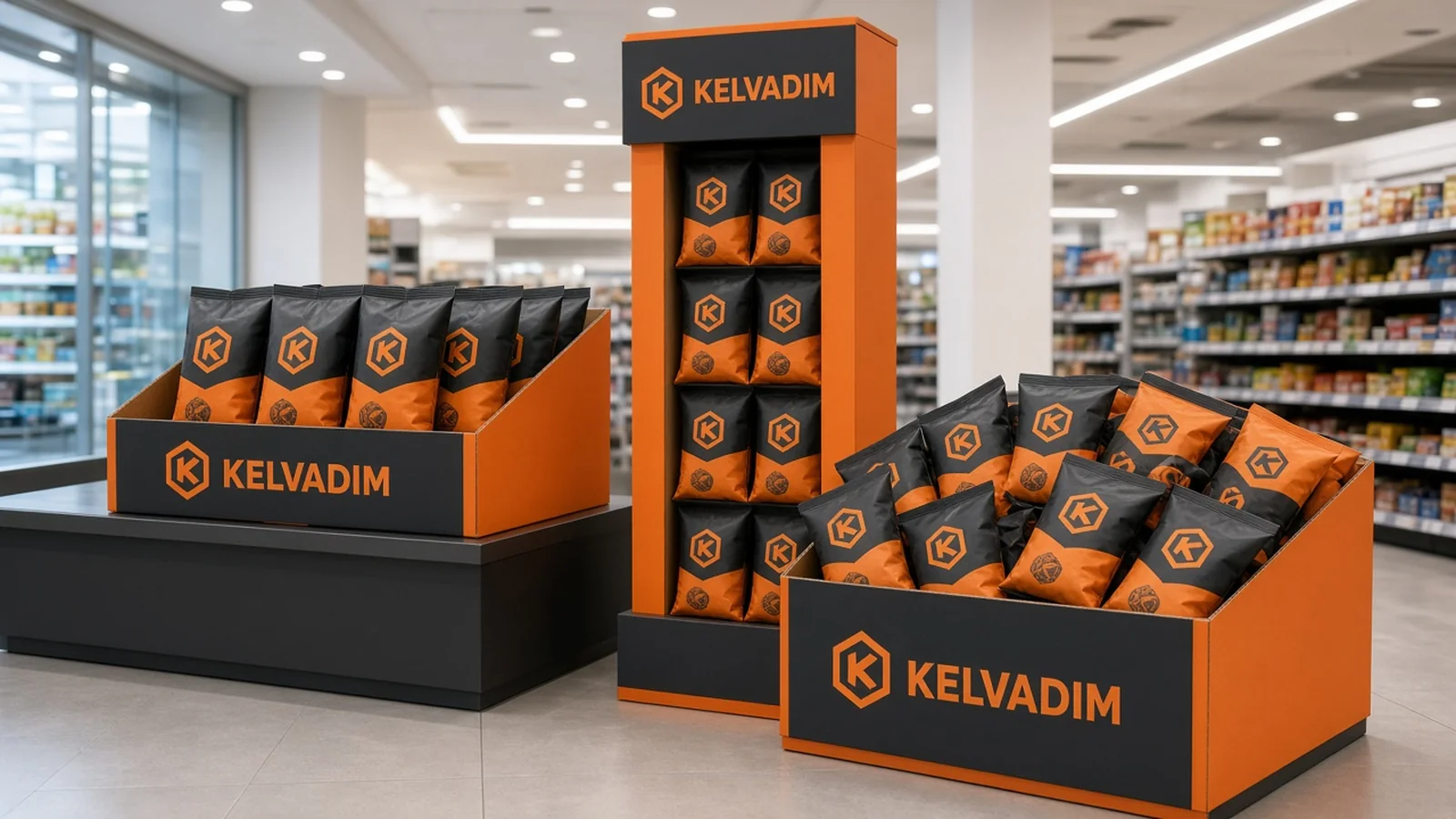
What are the main types of display boxes?
Custom display boxes come in several formats, and picking the wrong one is a common, costly mistake. A floor unit for a lip balm wastes space; a counter tray for a heavy multipack collapses. This guide compares each type so you can match the display to your product and the store.
Xpert Packages is a custom packaging company that makes every display to your exact size, with offset, digital or screen printing, foil and spot UV, on a matte or gloss surface.
| Type | Where it sits | Best for | Size | Key strength |
|---|---|---|---|---|
| Counter display | Checkout or countertop | Small, light items | Small | Impulse buys at the till |
| Floor display | Aisle or store floor | Many units or larger items | Large | Visible from a distance |
| PDQ tray | Shelf or counter | Fast-moving stock | Small to medium | Ships and displays in one |
| Dump bin | Floor, aisle end | Loose or bulk items | Large, open | Encourages rummaging |
| Peg-hook display | Peg wall or hook strip | Hanging packs | Varies | Uses vertical space |
What is a counter display box?
A counter display sits next to the register. It usually has a tiered or open front and a printed header card. Counter displays suit small, light products bought on impulse: lip balm, candy, small accessories, travel sizes. See our counter display units for styles.
Choose it when: your product is small, the store has limited counter space, and you want checkout visibility.
What is a floor display?
A floor display stands on its own, often with several shelves. It holds more stock and can be seen down the aisle. Floor displays suit launches, seasonal promotions and product families. They need stronger board, usually corrugated, to carry the load.
Choose it when: you have many units or a product range to show, and the retailer has agreed floor space.
What is a PDQ display?
PDQ stands for "pretty darn quick." A PDQ tray is a shipping case that becomes the display: staff open or tear off the top and place it straight on the shelf or counter. It saves labor and keeps branding on the shelf edge.
Choose it when: the product sells quickly and the retailer wants fast restocking with little setup.
What is a dump bin display?
A dump bin is a large open container, usually placed at the end of an aisle, filled with loose or bagged products. It invites shoppers to dig in. Our dump bin displays work well for seasonal goods, toys and snacks.
Choose it when: products are durable, not fragile, and benefit from a casual, bargain-style presentation.
What is a peg-hook display?
A peg-hook display uses hooks to hang products with a hang tab or header. It uses vertical wall space and keeps items at eye level. Learn more on our peg-hook displays page.
How do you choose the right display type?
Ask these questions:
- How big and heavy is one unit? Small and light points to counter or PDQ; large or heavy points to floor.
- How many units should one display hold? Size it to what the store will restock.
- Where has the retailer agreed to place it? Counter, shelf, aisle end or peg wall.
- How fast does it sell? Fast sellers suit PDQ trays.
- How will it ship? Most displays ship flat; check assembly is simple.
How does print change each display type?
- Counter displays: the header does the selling, so use bold type and a spot UV or foil logo.
- Floor displays: large panels suit full-color offset print.
- PDQ trays: keep branding on the front lip, visible after the top is removed.
- Food displays: ask about food-safe packaging options; see our custom food packaging boxes.
For a deeper look at why displays sell, read how retail display boxes increase impulse sales. For structure basics, see packaging structures: folding, rigid and mailer.
How do display types compare side by side?
| Factor | Counter | Floor | PDQ | Dump bin | Peg-hook |
|---|---|---|---|---|---|
| Space needed | Small | Large | Small to medium | Medium | Wall or rack |
| Typical products | Small, impulse items | Ranges, larger items | Fast sellers | Durable, loose items | Hanging packs |
| Setup effort | Low | Medium | Very low | Low | Low |
| Retailer approval | Usually easy | Needs agreed floor space | Usually easy | Needs floor space | Needs pegs or rack |
What should you tell a supplier when ordering display boxes?
To get an accurate quote, send:
- Display type (counter, floor, PDQ, dump bin or peg-hook).
- Product size and weight, and how many units the display should hold.
- Where it will sit, such as a counter, an aisle end or a shelf.
- Header card needs, including the message and whether it should be removable.
- Print and finish, for example digital or offset printing with gloss or matte.
- Quantity, and whether displays ship filled or flat.
Every box is made to your exact size, so we size trays and dividers around your product.
Which mistakes should you avoid with display boxes?
- Choosing a floor display without retailer agreement. Floor space is often limited and must be agreed in advance.
- Underestimating weight. Heavy products need stronger board and sometimes extra supports.
- Overloading the header. One short message reads better from a distance than a paragraph.
- Hiding the product. If the front lip is too high, shoppers cannot see what is inside.
- Forgetting restocking. A display that is hard to refill ends up half empty.
See how display boxes increase impulse sales for design tips.
Can one display design work in several stores?
Usually, yes, if you design for the smallest space you expect. A counter display that fits a compact checkout will also fit a larger one. Keep the header message general enough to work in every store, and use a removable header card if you plan seasonal offers.
How do you choose a display box, step by step?
The right display box depends on where it will sit and what it holds. Work through these points before you request a quote.
- Where will it go? Counter, shelf or checkout area. Measure the space it must fit.
- What will it hold? Note product size, weight and how many units each display should carry.
- How will shoppers take products? Open-front trays suit grab-and-go items; tiered designs suit several products at once.
- What must the header say? Keep the brand name and one clear message large enough to read from a distance.
- How will it ship? Decide whether displays ship flat and are assembled in store.
| Question | Why it matters |
|---|---|
| Product weight | Decides board strength and whether corrugated is needed |
| Units per display | Sets tray depth and number of rows |
| Assembly in store | Simpler folds mean displays get set up correctly |
| Print coverage | Inside and outside print keeps the display branded when half empty |
Before ordering a full run, ask for a proof and set up one display yourself. Fill it with real products, place it on a counter or shelf, and step back a few meters to check that the header is easy to read. Ask a store colleague to fold it without instructions; if they struggle, simplify the folds. Small changes at this stage, such as a deeper tray or larger header text, are much easier than fixing a finished order.
Mistakes to avoid: trays too shallow for the product, small text on the header card, and displays that are hard for staff to fold. Every box is made to your exact size, so the display can be matched to the product and the shelf space.
How do I request a quote?
Share your product size, units per display and the display type you need. Request a quote — minimum 50 units, runs of 50–249 quoted individually, 7–14 business days. Start your quote.
Frequently asked questions
- What is the difference between a PDQ and a counter display?
- A PDQ tray doubles as the shipping case and goes straight onto the shelf. A counter display is a dedicated display structure for the checkout.
- Which display box is best for small products?
- Counter displays and PDQ trays suit small, light products.
- Are floor displays strong enough for heavy items?
- They can be, using corrugated board sized for the load. Tell us the weight per unit when you request a quote.
- Can I order display boxes in my own size?
- Yes. Every display is made to your exact size.
- What is the minimum order for display boxes?
- Minimum 50 units, runs of 50–249 quoted individually.
About the author: Xpert Packages Team
Xpert Packages is a custom packaging solutions provider serving businesses across retail, eCommerce, food, cosmetics and other industries. Our team writes these guides from the box styles, materials and finishes in our own catalog.