
By Xpert Packages Team · · Updated
Burger Box Guide: Grease Barriers, Venting, Takeaway Styles
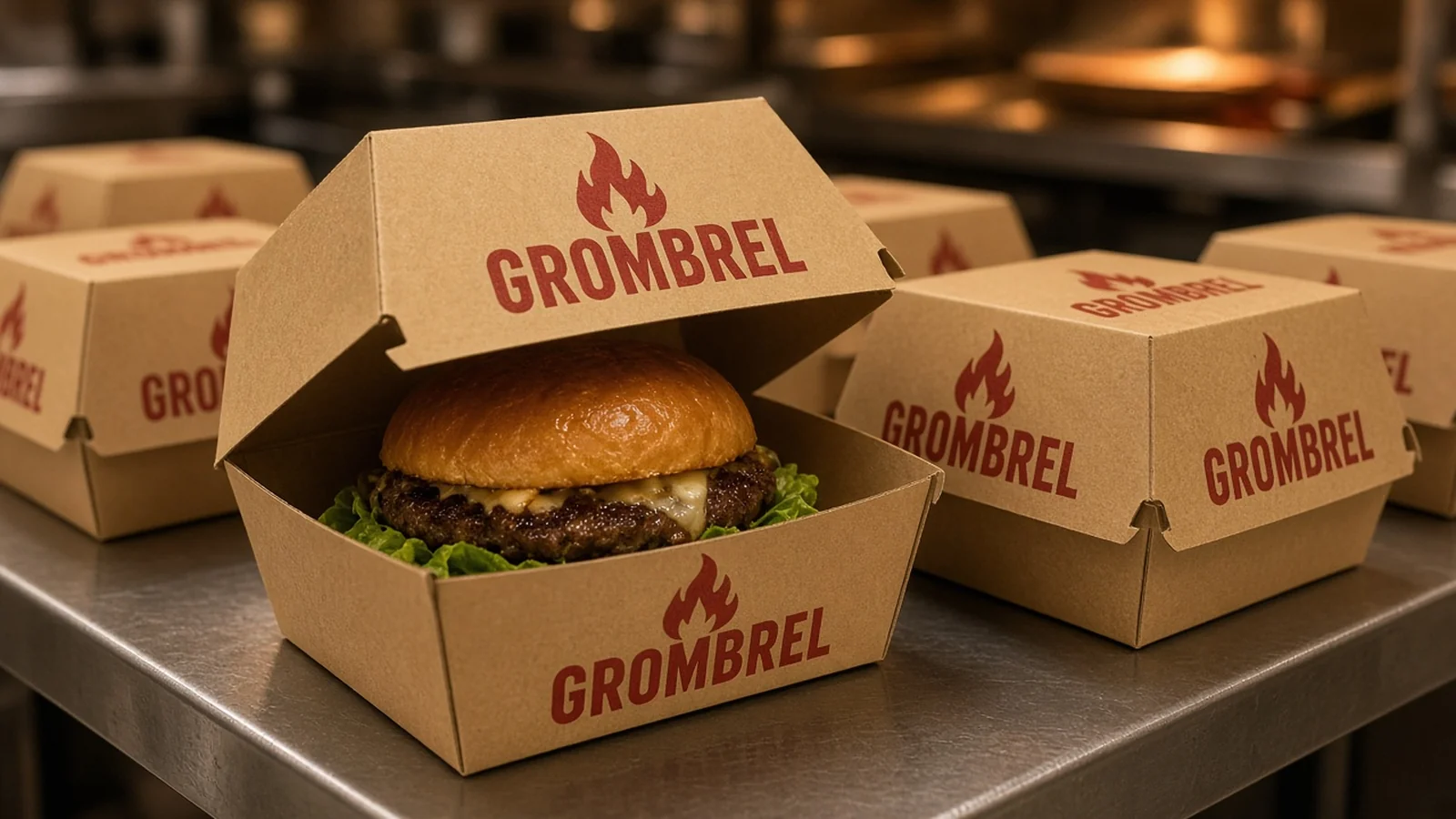
Which burger box styles are there?
Custom burger boxes have to hold a hot, juicy product and still look good when opened. This guide compares styles and the practical details that matter.
| Style | How it works | Best for |
|---|---|---|
| Hinged clamshell | One-piece box with a hinged lid | Single burgers, takeaway counters |
| Tray and sleeve | Open tray with a printed sleeve | Gourmet burgers, dine-in to go |
| Gable / handle box | Carry box with a handle | Combos, burger and sides |
| Window box | Clamshell or carton with a window | Display at the counter |
How do you handle grease?
Grease can soften board and stain print. Tell us the menu item and we will recommend food-safe packaging options and board suited to greasy food. A liner or wrap inside the box also helps.
Why does venting matter?
A sealed box traps steam, which makes buns soggy. Small vents or a slightly open design release steam during short deliveries.
How should burger boxes be sized?
Every box is made to your exact size. Measure the assembled burger's width and height, add room for the wrap, and keep the fit snug so it doesn't slide.
How can you brand a burger box?
- Bold logo on the lid, visible in delivery photos.
- Offset or digital print for full color; screen printing for one bold color on kraft.
- Soy-based inks for food brands.
- Compostable board for single-use takeaway.
- A simple message inside the lid.
Which material should you choose?
Paperboard suits light single burgers; kraft gives a natural look; corrugated suits combos and heavier orders. See custom food packaging boxes and eco friendly packaging boxes. Also read food-safe packaging materials.
How do burger box styles compare?
| Factor | Clamshell | Tuck-top carton | Sleeve and tray | Window box |
|---|---|---|---|---|
| Speed to pack | Very fast | Fast | Medium | Fast |
| Hold for stacked burgers | Good | Good | Very good | Good |
| Print area | Lid and sides | All panels | Sleeve | Around the window |
| Best for | Quick service, delivery | Takeaway, events | Premium burgers | Shows the food at the counter |
Choose by how fast your kitchen packs and how far the food travels.
How do you choose a burger box, step by step?
- Measure your largest burger. Include toppings, a skewer if you use one, and the height when stacked. Every box is made to your exact size.
- Decide how it travels. Dine-in, takeaway or delivery each need different strength and venting.
- Pick the style from the table above.
- Choose the board. Kraft board or food-safe paperboard, with a grease-resistant or food-safe coating where the burger sits.
- Plan venting so steam escapes and the bun stays dry.
- Design the print. Logo on the lid, social handle on the side, simple messages inside.
- Approve the proof and order a test run.
What can you print on a burger box?
- Logo and brand color on the lid for instant recognition.
- Social handle or QR code on a side panel, linking to your menu or ordering page.
- Menu cues, such as a checkbox for burger type, so staff can mark orders quickly.
- Short messages inside the lid, such as "Enjoy it hot".
- Disposal guidance, such as "Compost me" for compostable board or "Recycle me" for recyclable board.
Offset printing suits large runs; digital printing suits short or seasonal runs. Soy-based inks fit a natural or eco brand.
Which mistakes should you avoid with burger boxes?
- No venting. Trapped steam makes buns soggy before delivery.
- A box that is too tall. Burgers slide and toppings shift.
- A box that is too short. The lid crushes the burger.
- Ink in food-contact areas. Keep heavy print on the outside.
- No grease barrier. Oil soaks through and stains the box.
- Ignoring stacking. Delivery bags stack boxes, so the lid must take light weight.
Burger box checklist
- Largest burger measured, including height.
- Style chosen for how fast you pack and how far it travels.
- Food-safe board and grease-resistant coating selected.
- Vents planned.
- Print kept on the outside, with any claim matching the material ordered.
For more on materials, read food-safe packaging materials and eco-friendly packaging materials.
Burger boxes for delivery vs counter service
Counter and dine-in orders travel a few metres, so a light clamshell often works well. Delivery orders spend time in bags and vehicles, which adds steam, stacking pressure and movement. For delivery, consider:
- Stronger board, such as kraft or corrugated, so the lid does not crush.
- Vents on the sides or lid to let steam escape.
- A snug fit, so the burger does not slide and toppings stay in place.
- A secure closure, such as a locking tab, so the box does not open in the bag.
- A sticker seal, which also shows the order has not been opened.
If you offer both, one box designed for delivery will usually work at the counter too, which keeps ordering simple.
Can you use the same box for other menu items?
Yes, if sizes are similar. Many restaurants use one burger box for burgers, wraps and loaded fries, and a second size for sides. Fewer sizes mean simpler ordering and storage. Measure your largest item in each group and size the box to that. Pair burger boxes with matching sleeves or bags so the whole order looks consistent.
How often should you update burger box artwork?
A permanent design keeps costs down and builds recognition. If you run seasonal menus, keep the main box design fixed and add a sticker or sleeve for limited offers. Digital printing makes short runs of a seasonal design practical without changing your core stock.
How do you test a burger box?
Before a large order, pack your heaviest, saucier burgers in a sample run and time them over a typical delivery. Check whether the bun stays dry, the lid stays closed, grease stays inside and the box survives stacking in a bag. Note any problems on your next quote so the board, coating or vents can be adjusted. Minimum 50 units, runs of 50–249 quoted individually, so testing does not mean overstocking.
Which finishes suit burger boxes?
Most burger boxes use an uncoated or lightly coated outer surface, because heavy laminations add cost without much benefit for single-use packaging. A matte varnish or aqueous coating protects print from handling and light moisture. Save foil and spot UV for premium or event packaging, where the box is part of the brand story.
How do I request a quote?
Request a quote — minimum 50 units, runs of 50–249 quoted individually, 7–14 business days. Start your quote.
Frequently asked questions
- What is the most common burger box style?
- The hinged clamshell.
- Are burger boxes food-safe?
- We offer food-safe packaging options; tell us the menu item when you request a quote.
- Can burger boxes be compostable?
- Yes, compostable board is available.
- How do I stop buns going soggy?
- Add venting and keep delivery times short.
- What is the minimum order?
- Minimum 50 units, runs of 50–249 quoted individually.
About the author: Xpert Packages Team
Xpert Packages is a custom packaging solutions provider serving businesses across retail, eCommerce, food, cosmetics and other industries. Our team writes these guides from the box styles, materials and finishes in our own catalog.