
By Xpert Packages Team · · Updated
How Retail Display Boxes Increase Impulse Sales
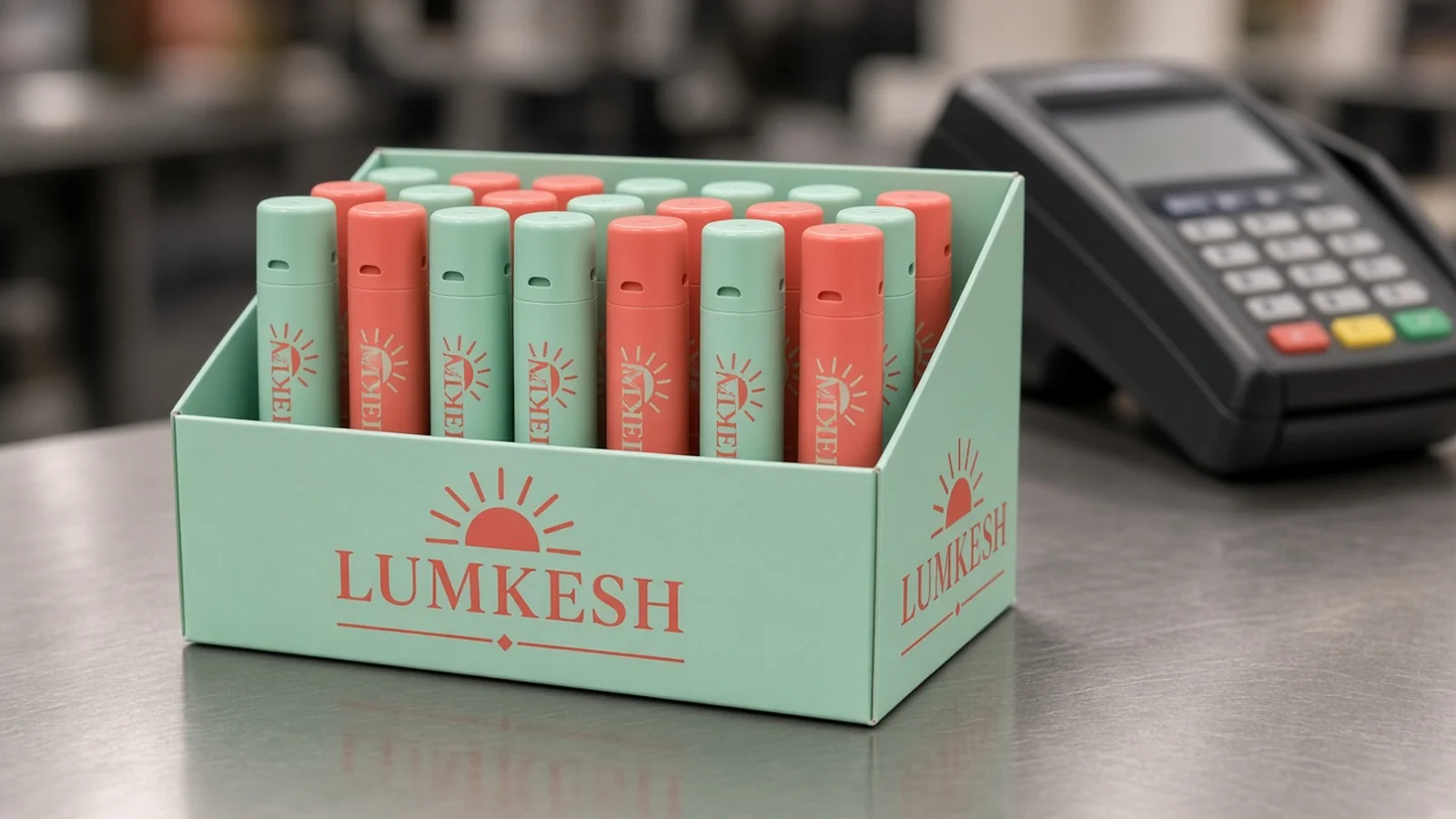
Why do display boxes lead to impulse purchases?
Retail display boxes are small structures with a big job. A plain shelf asks the shopper to search; a display box presents the product, tells them what it is, and invites them to take one. This guide explains why that works and how to design a display that earns its counter space.
Xpert Packages is a custom packaging company that makes display boxes to your exact size, printed with your brand.
Impulse buys happen when a product is visible, understandable and easy to grab at the right moment. A display box helps with all three:
- Visibility: it lifts the product out of a crowded shelf and gives it its own space.
- Clarity: printed headers and side panels explain the product at a glance.
- Access: an open front or tray lets the shopper pick up an item without asking.
- Timing: placed near the checkout, it reaches shoppers while they wait.
Where should a display box be placed?
| Placement | Display type | Why it works | Typical products |
|---|---|---|---|
| Checkout counter | Counter display unit | Shoppers wait and browse | Lip balm, snacks, small accessories |
| Peg wall or hook strip | Peg-hook display | Uses vertical space, eye level | Small packs, cards, accessories |
| Aisle end or floor | Dump bin or floor display | Large, visible from a distance | Seasonal items, multipacks |
| Shelf edge | Shelf-ready tray | Fills shelf neatly with branding | Food, personal care |
See our peg-hook displays for hanging products, and the companion guide on counter, floor and PDQ display styles for choosing between formats.
What design features make a display box sell?
A clear header card
The header is the billboard. Keep it to a brand name, one product line and one short benefit. Shoppers read it in seconds, so large type wins.
Strong product visibility
Use an open front, a cut-down tray or a window so the actual product is visible. People buy what they can see.
Brand color and finish
Consistent brand colors make the display recognizable across stores. A gloss surface makes colors pop under store lighting; spot UV or foil on the logo adds a premium cue.
The right fill level
A display that looks full sells better than one that looks picked over. Size the display around how many units the store will restock, not the maximum you can fit.
Easy assembly
Store staff set up displays. A design that folds and locks quickly is more likely to go out on the counter instead of staying in the stockroom.
How does a display box support your brand beyond one sale?
A display carries your brand into the store for as long as it stands. Matching the display to your product cartons creates a consistent look on the shelf and at the counter. For apparel and accessory brands, displays work well alongside custom clothing boxes to keep packaging and point-of-sale consistent.
What should you check before ordering display boxes?
- Product size and weight. Every box is made to your exact size; measure the product and the number of units per display.
- Store space. Ask retailers how much counter or shelf depth they allow.
- Board strength. Heavier products need sturdier board or corrugated construction.
- Print. Offset, digital or screen printing, with foil or spot UV, on a matte, gloss or soft-touch surface.
- Shipping. Displays usually ship flat and are assembled in store.
Which mistakes reduce display box sales?
- Too much text on the header.
- A design that hides the product.
- Displays too big for the counters they go to.
- Weak board that sags once loaded.
- No price or product information space where the retailer expects it.
How do you plan a display box that sells, step by step?
- Define the goal. A launch, a seasonal promotion or a permanent checkout display each need a different design.
- Choose the display type. Counter displays suit small items; floor and PDQ displays suit larger ranges. Compare them in types of display boxes.
- Size it to the product. Every box is made to your exact size, so the tray, dividers and lip fit your units.
- Write one header message. A product name and a single benefit work better than a list.
- Choose print and finish. Digital printing suits small runs; offset suits larger ones. Gloss makes colors pop under store lighting; matte reduces glare.
- Approve the proof and check the header, tray and assembly lines.
- Plan restocking with the retailer so the display stays full.
Display box checklist before you order
- The product is visible from the front without lifting anything.
- The header can be read from a few steps away.
- The display fits the space the retailer has agreed.
- The board is strong enough for a full load.
- Assembly takes less than a minute with clear fold lines.
- Your logo and brand colors match your other packaging.
How do you measure whether a display is working?
Without inventing numbers, there are simple ways to judge a display:
- Compare sell-through. Track units sold in the weeks with the display against similar weeks without it.
- Ask the store team. Staff notice whether shoppers pick the product up.
- Check restock frequency. A display that needs frequent refills is selling.
- Test one change at a time. Try a new header message or position, then compare.
Minimum 50 units, runs of 50–249 quoted individually, so you can test a design in a few stores before a wider rollout.
Should displays ship filled or flat?
Filled displays arrive ready to place, which saves store staff time but uses more shipping space. Flat displays cost less to ship and store, but someone has to assemble and fill them. Ask your retailer which they prefer before you order, and make sure fold lines and instructions are clear if displays ship flat.
Which display box mistakes cost sales?
A display only helps sales when shoppers notice it and can take a product easily. These common mistakes work against that.
| Mistake | Better approach |
|---|---|
| Header message too long | Use the brand name plus one short benefit |
| Display empties and looks bare | Print the inside of the tray so it stays branded as stock goes down |
| Products hard to reach | Lower the front lip or use an open-front design |
| Colors that clash with the products | Match the display to the product packaging so the set reads as one |
| Weak board for heavy items | Choose corrugated board for heavier products |
Display launch checklist:
- Confirm product size and how many units each display carries.
- Check the counter or shelf space where it will sit.
- Write a short header message and keep the logo large.
- Choose a finish that suits handling, such as matte or gloss with aqueous coating.
- Approve a proof, then allow 7–14 business days for production.
- Send set-up notes to stores so displays are folded correctly.
Minimum 50 units, runs of 50–249 quoted individually, so you can trial a display in a few stores before rolling it out more widely.
How do I request a quote?
Tell us your product, units per display and where it will stand. Request a quote — minimum 50 units, runs of 50–249 quoted individually, 7–14 business days. Start your quote.
For more on why branded packaging keeps customers coming back, read why custom packaging increases customer loyalty.
Frequently asked questions
- Do display boxes really increase sales?
- They make products more visible and easier to pick up at the point of purchase, which is where impulse decisions happen. Results depend on placement, product and design.
- What is the best place for a display box?
- Near the checkout is the most common spot for small, low-cost items. Peg walls and aisle ends suit other products.
- Can display boxes be made in any size?
- Yes. Every box is made to your exact size.
- Do display boxes ship flat?
- Most counter displays ship flat and are folded into shape in store.
- How quickly can display boxes be produced?
- Production is 7–14 business days.
About the author: Xpert Packages Team
Xpert Packages is a custom packaging solutions provider serving businesses across retail, eCommerce, food, cosmetics and other industries. Our team writes these guides from the box styles, materials and finishes in our own catalog.