
By Xpert Packages Team · · Updated
Pizza Box Sizes Chart: 8\" to 18\" and What Fits
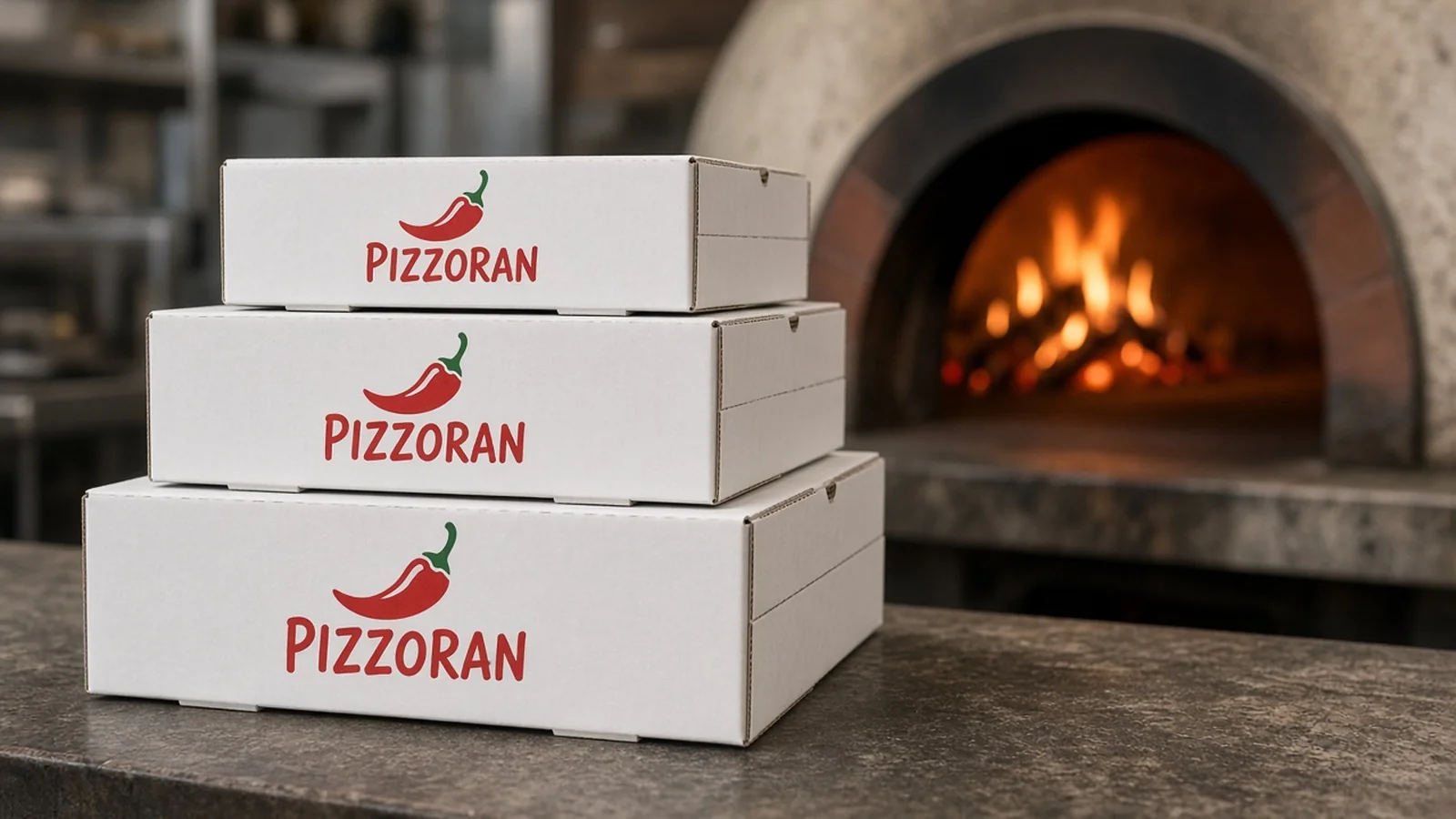
What size pizza box do you need?
Sizing custom pizza boxes correctly keeps pizza from sliding, protects toppings and avoids wasted board. Every box is made to your exact dimensions. The chart below is a planning guide based on common pizza sizes, not a list of stock boxes.
| Pizza name (typical) | Pizza diameter | Box inside size to plan for |
|---|---|---|
| Personal | 8 in | Slightly over 8 × 8 in |
| Small | 10 in | Slightly over 10 × 10 in |
| Medium | 12 in | Slightly over 12 × 12 in |
| Large | 14 in | Slightly over 14 × 14 in |
| Extra large | 16 in | Slightly over 16 × 16 in |
| Party | 18 in | Slightly over 18 × 18 in |
Names vary by pizzeria; measure your actual pizzas.
How do you measure for a pizza box?
- Measure the widest baked pizza, not the dough.
- Add a small clearance on each side so the pizza lifts out easily.
- Measure the tallest topping height for depth.
- Tell us the board and style you want.
How deep should a pizza box be?
Thin-crust pizzas need shallow boxes; deep-dish and heavily topped pizzas need more depth so the lid does not touch the cheese.
Which materials suit pizza boxes?
Corrugated board is usual for heat and weight. Kraft gives a natural look. Compostable board is available, and we offer food-safe packaging options and soy-based inks. See custom food packaging boxes and eco friendly packaging boxes.
What else should you plan?
- Vents to release steam.
- Print: offset or digital for full color; screen printing for a bold one-color lid.
- Stacking: boxes should stack without crushing.
How do you choose a pizza box, step by step?
- Measure the pizza after baking. Pizzas spread in the oven, so measure a cooked pizza, not the dough.
- Add clearance. Leave a little space around the edge so the crust is not squashed when the lid closes.
- Measure the height. Include toppings and any dip pots that travel in the box.
- Choose the board. Corrugated board for strength and insulation; kraft or white outer liners for the look you want.
- Plan venting so steam escapes and the crust stays crisp.
- Design the lid. Logo, phone number or QR code, and a short message.
- Approve the proof and order a test run. Production takes 7–14 business days.
Every box is made to your exact dimensions, so you can order a box for a 10" pizza that is sized for your 10" pizza, not a near-fit.
Which box style suits which pizza?
| Pizza type | Suggested box | Why |
|---|---|---|
| Thin crust | Standard depth corrugated box | Low height, strong lid |
| Deep dish or stuffed crust | Deeper box | Extra height for toppings and crust |
| Slices | Slice box or wedge | Single portions, less waste |
| Calzones and flatbreads | Rectangular box | Matches the shape |
| Pizza with sides | Larger box or separate side box | Keeps dips and sides upright |
What should you print on a pizza box?
- Logo and brand colors across the lid.
- Phone number, website or QR code for reorders.
- Opening hours or a short offer, which can be updated each print run.
- Inside-lid message, such as a thank-you or a social handle.
- Disposal guidance, such as recyclable or compostable, matching the board you chose.
Digital printing suits short or seasonal runs, while offset printing suits larger runs. Keep heavy print on the outside of the box.
Which mistakes should you avoid with pizza boxes?
- Measuring raw dough. The cooked pizza is larger.
- No clearance. The crust touches the walls and the lid presses on toppings.
- No vents. Steam softens the crust on the way.
- Too shallow for deep dish. Toppings stick to the lid.
- One size for every pizza. A small pizza slides around in a large box and arrives with toppings out of place.
Pizza box checklist
- Cooked pizza measured, with clearance added.
- Depth set for toppings and any extras.
- Corrugated board and vent placement chosen.
- Lid artwork includes contact details or a QR code.
- Any claim on the box matches the material ordered.
See our custom pizza boxes, and read food-safe packaging materials for board and coating options.
How should pizza boxes be stored and folded?
Pizza boxes usually arrive flat to save space. Plan where they will be stored: somewhere dry, away from ovens and steam, so the board stays crisp. Fold a stack before service so staff are not folding during busy hours. Corrugated boxes with clear fold lines and locking tabs fold quickly, and the lid closes without crushing the pizza.
Which extras should you plan for?
- Dip pots and sauce cups. A small insert or side box keeps them upright.
- Liners. A food-safe liner or coating stops grease marking the board.
- Slice separators. Useful for parties and catering orders.
- Tamper seals. A sticker across the lid shows the order has not been opened.
- Carry handles or bags for multiple-box orders.
How do you plan sizes across a menu?
Most pizzerias offer three or four sizes. List every pizza size you sell, measure a cooked pizza of each, and order one box size per pizza size. If you sell rectangular pizzas or calzones, add a rectangular box. Keep artwork the same across all sizes so every order looks consistent, and reorder each size separately as stock runs down.
Can pizza boxes be eco-friendly?
Yes. Corrugated board is widely recyclable when it is clean, and compostable board options are available. Grease is the main challenge: heavily soiled board may not be accepted for recycling in some areas, so food-safe liners or coatings help. Print simple disposal guidance on the lid, such as "Recycle clean parts", and match any claim to the material you ordered.
How do you test pizza boxes before a full order?
Order a small run of each size and test them on a busy night. Check that the pizza fits with clearance, the lid closes without touching toppings, steam escapes, and the box holds up when stacked in a delivery bag. Adjust size or venting on your next quote if anything fails.
How do you order the right pizza box sizes?
Once you know which sizes you need, a short order plan keeps every size consistent and easy to stock.
- List each pizza size on the menu. Include any sides or desserts that share the same box.
- Measure a finished pizza. Measure the widest point after baking, then allow a little space so toppings are not touched.
- Set the depth. Deeper boxes suit thick crusts and heavy toppings; shallower boxes suit thin crust.
- Choose the board. Corrugated board helps with heat, stacking and delivery.
- Keep one design. Use the same print on every size so the set looks unified.
- Plan quantities per size. Minimum 50 units, runs of 50–249 quoted individually.
| Size question | What to decide |
|---|---|
| Will slices or whole pizzas go in it? | Box size and whether you need a slice box |
| How far do deliveries travel? | Board strength and vents |
| How many boxes stack in the oven area? | Storage space and flat-pack quantity |
| Will sizes share artwork? | One file with a scaled logo |
Every box is made to your exact size, so each pizza on the menu can get a box that fits instead of the nearest stock size. Production takes 7–14 business days.
How do I request a quote?
Request a quote — minimum 50 units, runs of 50–249 quoted individually, 7–14 business days. Start your quote.
Frequently asked questions
- What is the most common pizza box size?
- Many pizzerias sell 12 and 14 inch pizzas, but measure your own.
- Do you have standard pizza box sizes?
- No. Every box is made to your exact size.
- How much bigger should the box be than the pizza?
- Slightly larger, so the pizza fits flat and lifts out easily.
- Are pizza boxes compostable?
- Compostable board is available.
- What is the minimum order?
- Minimum 50 units, runs of 50–249 quoted individually.
About the author: Xpert Packages Team
Xpert Packages is a custom packaging solutions provider serving businesses across retail, eCommerce, food, cosmetics and other industries. Our team writes these guides from the box styles, materials and finishes in our own catalog.