
By Xpert Packages Team · · Updated
Kraft vs Cardboard vs Corrugated: Which Box Material Should You Choose?
Why are kraft, cardboard and corrugated so often confused?
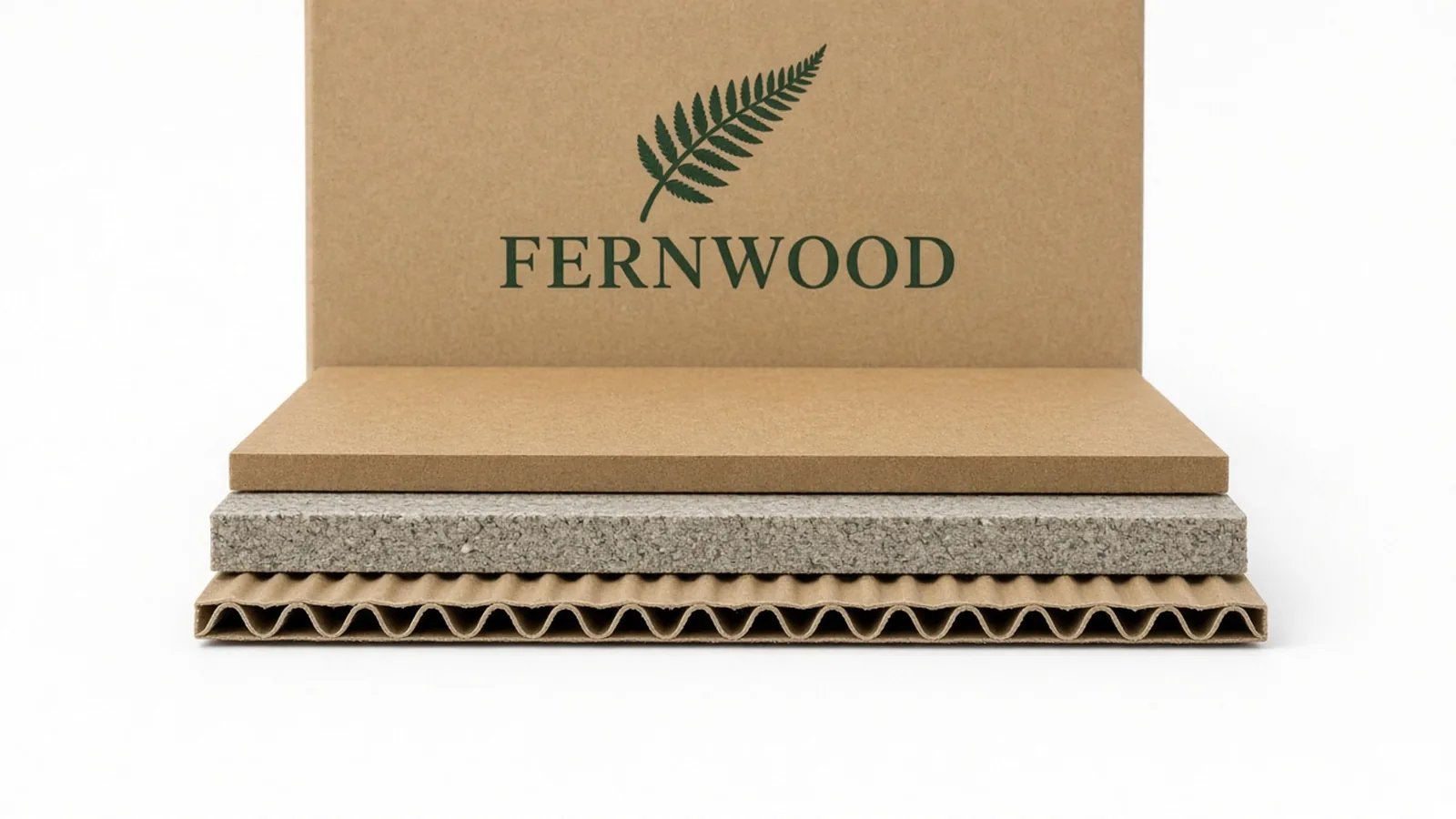
In everyday speech, people call almost any paper-based box “cardboard”. In packaging, the words mean different things. Paperboard is a single thick sheet. Corrugated is a layered board with a wavy core. Kraft describes a type of paper, usually brown and unbleached, that can be used as the surface of either. Knowing the difference helps you choose a box that protects the product and looks the way you want.
What are the main packaging material types?
| Material | What it is | Strength | Print look | Best for |
|---|---|---|---|---|
| Paperboard (“cardboard”) | A single thick sheet of paper-based board | Light | Sharp, detailed | Retail folding cartons |
| Corrugated board | Flat liners glued to a fluted (wavy) middle layer | High | Good, depends on flute | Shipping and mailer boxes |
| Kraft | Unbleached brown paper or liner | Depends on the board it is part of | Natural, earthy | Natural-look cartons and mailers |
| Rigid board | Thick, dense board wrapped in printed paper | Very stiff | Premium wrap | Luxury and gift boxes |
What is paperboard (cardboard)?
Paperboard is a thick, single-layer paper material used for most retail folding cartons, such as cosmetics, food and personal care boxes. Its smooth surface takes detailed print and finishes well. Common grades include white bleached board (often called SBS) and duplex board with a grey or recycled back. Paperboard is light and folds flat, but it is not designed to protect heavy products in the mail on its own.
What is corrugated board?
Corrugated board is made of two flat liners with a fluted layer glued between them. The flutes act like small arches, which give the board strength and cushioning for its weight. That is why corrugated is the standard for shipping boxes and mailer boxes.
Flutes come in different sizes. Smaller flutes give a smoother surface for printing; larger flutes give more cushioning. Single-wall board has one fluted layer; double-wall has two for heavier loads.
For example, our mailer boxes are primarily single-wall corrugated, commonly E-flute for small/medium and B-flute for larger/heavier mailers.
What is kraft packaging?
Kraft is a strong paper made by the kraft pulping process. In its unbleached form it has the familiar brown color and a natural texture. Brands choose kraft for an earthy, handmade or minimalist look. Printing on brown kraft looks different from printing on white board: colors appear darker and more muted, and white ink or bold single-color designs often work best.
Is kraft the same as corrugated?
No. Kraft is a corrugated material/liner option, not the primary material family. A kraft mailer box is usually corrugated board with a kraft liner on the outside.
Is kraft packaging eco-friendly?
This is one of the most common questions about kraft, and the honest answer depends on the specific material, its source and its documentation. A brown color alone does not prove a material is recycled, recyclable or certified. Ask for documentation for the specific material on your order.
What is rigid board?
Rigid board (often greyboard or chipboard) is a thick, dense board that does not fold. It is wrapped in printed or specialty paper to make rigid boxes, such as magnetic closure and book style boxes. It gives a heavy, premium feel and is chosen for luxury and gift packaging rather than shipping.
What is the best material for product boxes?
| If your box needs to… | Choose |
|---|---|
| Ship direct to customers | Corrugated (mailer or shipping box) |
| Sit on a retail shelf with sharp print | Paperboard folding carton |
| Look natural or minimal | A kraft option on a carton or corrugated box |
| Feel premium as a gift | Rigid board |
| Carry heavy products | Corrugated, with a sturdier board for heavier loads |
Many brands use more than one: a printed paperboard carton for the product, packed in a corrugated shipper for delivery.
How does material affect price?
Material is one of several price factors. Price depends on dimensions, material, structure, printing, number of colors, finishes, inserts, quantity, production and shipping requirements. Final price depends on specifications and quantity.
Which materials can I choose for my box?
Material options depend on the box style. Each product page lists the materials available for that style, so start with the style, then choose from its listed materials and confirm the choice on your quote.
Whichever material you choose, every box is made to your exact size, and our minimum order is 50 units for every box style (small runs of 50–249 units are quoted individually).
As a reference, our corrugated shipping boxes show “From $1.10 / unit at 1,000 units” and our paperboard auto lock bottom boxes show “From $0.59 / unit at 1,000 units”. Final price depends on specifications and quantity. Small runs of 50–249 units are quoted individually and show “Quote on request” on our product pages.
Production typically takes 7–14 business days after proof approval. Shipping time varies by destination.
How does material choice affect printing?
The surface you print on changes how your artwork looks. White paperboard gives the brightest colors and the finest detail, which is why most retail cartons use it. Corrugated board can be printed well, but the surface is less smooth, and larger flutes can show faint lines through very fine print. Brown kraft makes colors look darker and more muted, so designs on kraft often rely on bold shapes, one or two colors, or white ink.
| Surface | Color result | Design tips |
|---|---|---|
| White paperboard | Bright, accurate colors | Good for photos, gradients and fine text |
| White-lined corrugated | Good colors on a less smooth surface | Keep very fine detail to a minimum |
| Brown kraft | Darker, muted colors | Use bold shapes, one or two colors, or white ink |
| Wrapped rigid board | Depends on the wrap paper | The wrap paper sets the look and feel |
What questions should I ask before choosing a material?
- Will the box ship on its own, or inside another box?
- How heavy and how fragile is the product?
- Does the box need to sit on a retail shelf?
- Do I want a bright white look or a natural brown look?
- Will the customer keep the box after opening?
- Do I need inserts to hold the product in place?
Your answers usually point to one material family. If two options look equally good, ask for a quote on both with the same size and quantity and compare them side by side.
Frequently asked questions
- Is cardboard the same as corrugated?
- Not exactly. “Cardboard” usually means a single sheet of paperboard; corrugated has a fluted middle layer between two liners, which makes it stronger.
- Which material is strongest for shipping?
- Corrugated board is the usual choice for shipping and mailer boxes because the fluted layer adds strength and cushioning.
- Is kraft the same as corrugated?
- No. Kraft is a corrugated material/liner option, not the primary material family. A kraft mailer is usually corrugated board with a kraft liner.
- Is kraft packaging recyclable or certified?
- That depends on the specific material and its documentation. A brown color alone is not proof of recycled content or certification, so ask about documentation for your order.
- What is the best material for retail boxes?
- Paperboard folding cartons are the usual choice for retail shelves because they print sharply and fold flat.
About the author: Xpert Packages Team
Xpert Packages is a custom packaging solutions provider serving businesses across retail, eCommerce, food, cosmetics and other industries. Our team writes these guides from the box styles, materials and finishes in our own catalog.