
By Xpert Packages Team · · Updated
Nail Polish Packaging Ideas for Indie Beauty Brands
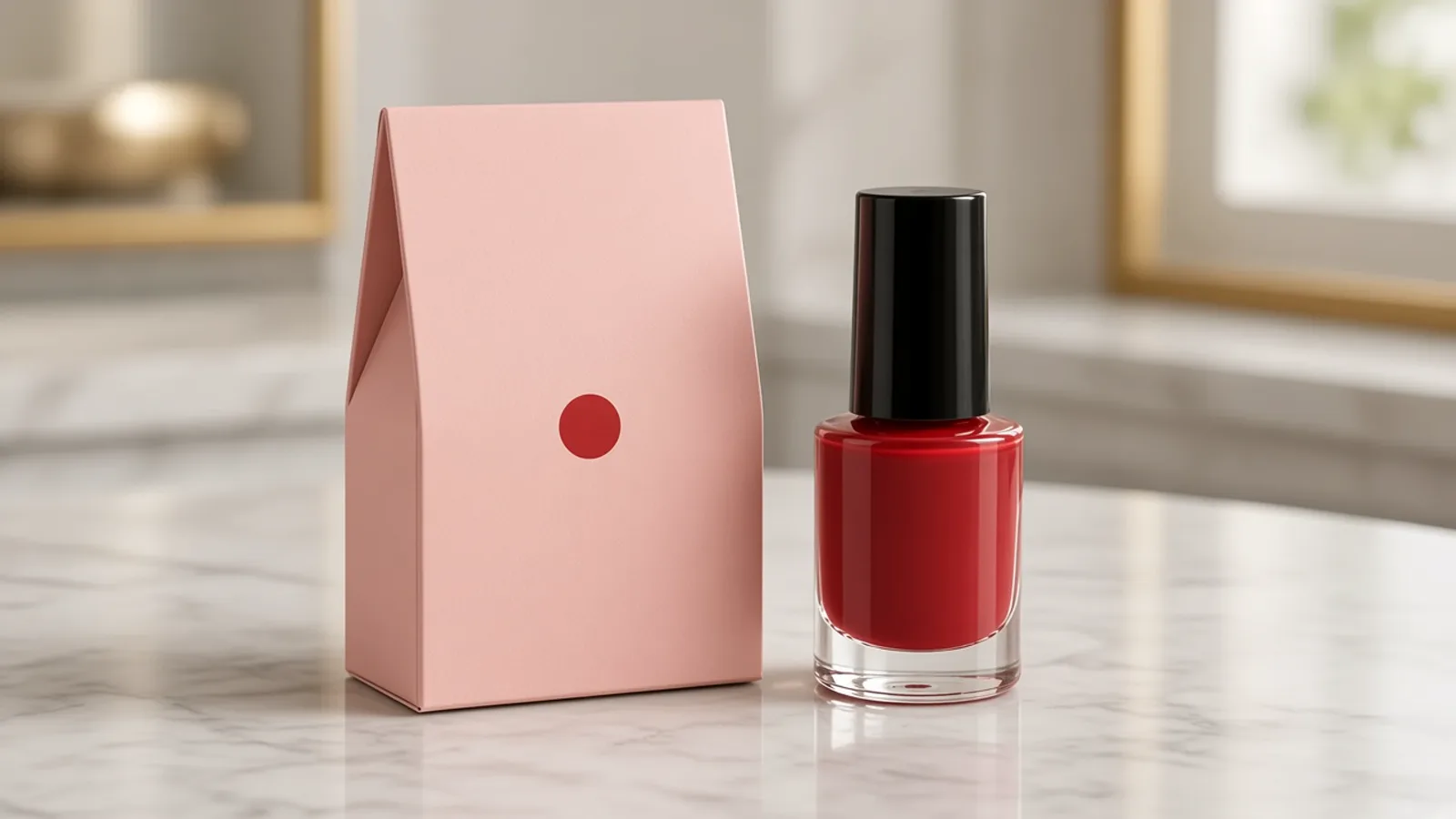
What makes a nail polish box work on a shelf?
Indie beauty brands need custom nail polish boxes that do three jobs: fit a small glass bottle, tell the shade apart from the rest of the line, and survive a bathroom shelf or a shipment of samples. The bottle is narrow and top-heavy. A loose carton lets it rattle, chip the cap, or arrive with polish on the glass. The outside has to show the colour even when the bottle is hidden, because shoppers compare shades before they open anything.
Look at the wider set of custom cosmetic boxes if the same brand also sells serums or compacts. Nail polish is a specific size problem inside that category. The ideas below stay with the bottle, the insert, and the printed panel. They are not a second product line.
Which carton and insert fit a polish bottle?
Measure the bottle with the cap on: height, diameter, and the widest point of the cap. The carton inside size needs a little clearance so the bottle drops in without force, and an insert so it cannot hit the wall in transit. A tuck-end folding carton is the usual indie structure. It ships flat to you, and you load the bottle after you fill it. A sleeve around an unboxed bottle is a lighter option when the glass and the cap are already the hero and you only need a branded band.
- Tuck-end carton with a pulp or folding insert for a single bottle.
- A two-bottle or trio carton when you sell a mini set. Give each bottle its own cell.
- A sleeve when the bottle is sold unboxed at a nail bar and you still want a logo.
- A mailer outside the carton only if you ship the polish yourself and want a second printed layer.
Skip a deep rigid lid for the first shade launch. Rigid and magnetic builds are quote-only and they add assembly. A folding carton lets you reorder a new shade name without redesigning a set-up box. If a later gift set needs a rigid case, quote that set on its own and keep this carton for the everyday SKU.
How should the shade and the brand appear?
Put the shade name and a printed colour chip where a shopper sees them without turning the box. The bottle behind a window can show the real polish, but a window is a choice, not a requirement. A solid panel with an honest colour swatch is easier to print consistently, and it avoids a window film you then have to describe. If you use a window, ask for it in the quote so the dieline includes it.
Keep the brand mark in one place, usually the top third of the front. Repeat the shade name on the bottom or the side so a stack of cartons is identifiable from the end. Perfume box design is a useful contrast: perfume often sells a single signature bottle, while polish sells a family of shades. Your system should make the shade louder than the logo once the brand is recognised.
Which finishes suit a small polish line?
Matte lamination feels closer to a treatment brand. Gloss lamination feels closer to a lacquer. Soft-touch lamination is a third option when the carton should feel soft next to a glossy bottle. Aqueous coating and varnish protect the print with less of a plastic sheen. Foil or spot UV on the logo, or on the shade name only, is enough decoration for a first run. Embossing a small mark works when the board weight can take it. Ask before you add embossing to a very small carton.
Print with offset, digital, or screen printing. Digital is the practical choice when each shade is a separate artwork and the quantity per shade is modest. Offset fits when one shared layout runs across many shades with only the chip and the name changing, if your artwork is built that way. Screen printing is available when you need a dense colour. Optional Pantone or PMS colours help when the swatch on the carton must sit next to the polish in the bottle and a four-colour build is not close enough.
What belongs in the artwork, and what should stay off it?
Include the product name, the shade, the volume if you print it, and the brand. Leave room for any ingredient or warning line your own compliance review says the carton must carry. This guide does not supply that legal copy. Do not add approval seals, awards, or “dermatologist” lines you cannot support. Describe the company as a custom packaging company.
More layout examples live in cosmetic packaging ideas. Use them for hierarchy and panel order. Keep the nail-polish page as the product you quote, because the bottle size and the insert are specific.
How do you plan a shade family without a new carton every time?
Build one dieline and one layout, then change the shade name and the colour chip. The brand mark, the bottle fit, and the insert stay. That is how a five-shade line stays recognisable and still tells the colours apart. Put the chip in the same corner every time so a row of cartons reads as a system. Put the shade name in the same type size so no shade looks like the “real” one and the others look like leftovers.
Decide the chip method before the first proof. A printed swatch is consistent from carton to carton. A window shows the real bottle and the real polish, and it needs a dieline hole and a film. Do not mix window and solid cartons inside one shade family unless you mean the mix to be obvious. Write the rule down: “all solid” or “all window.” The quote should repeat that rule so a later shade is not set up the other way.
Name the bottles the same way you will load them. If every SKU is the same glass, one insert works. If a top coat bottle is taller, it needs its own inside height. Say that in the first brief. A family that shares art and not glass will rattle in the short cartons or sit low in the tall ones.
How should you approve a multi-shade proof?
Check every shade as its own file. A shared logo that is correct on shade one can still sit on the wrong chip for shade four. Read the shade name aloud. Compare the chip to the bottle in daylight, and remember that a screen is not the printed board. If you asked for a Pantone or PMS colour, the proof note should name it. If you are using process colour, accept that the chip is an impression of the polish, not a laboratory match, unless you asked for a matched colour.
Check the small type you hope nobody reads: volume, the brand URL if you printed one, and the side panel. Confirm the insert is listed. Confirm the quantity per shade adds up to the order you think you placed. Minimum 50 units, runs of 50–249 quoted individually, is the commercial frame. It does not mean each shade must be the same quantity. It means the order you confirm is quoted on those terms.
How do you order the first set of shades?
Quote each shade quantity on its own if the art differs, and say they belong to one line. Minimum 50 units, runs of 50–249 quoted individually, applies to the order you place. Production takes 7–14 business days after the proof is approved. Approve every shade name on the proof, not only the shared logo. A swapped chip is the error that reaches a customer.
Request a quote — minimum 50 units, runs of 50–249 quoted individually, 7–14 business days. Name the bottle size and the number of shades in the request.
Frequently asked questions
- Do nail polish bottles need an insert?
- Yes if the bottle can move. A folding insert or a fitted cell stops the glass from hitting the carton wall.
- Can each shade be a different print run?
- Yes. Digital printing is the usual fit when the colour chip and shade name change and quantities stay modest.
- Is a rigid box better for polish?
- Not for a first shade line. Rigid and magnetic builds stay quote-only. A tuck-end carton is the usual indie structure.
- What is the minimum order?
- Minimum 50 units, runs of 50–249 quoted individually. Production takes 7–14 business days after approval.
- Can the carton show an approval seal?
- No. Do not print an outside approval seal or a standards-body mark. Print only the shade, the brand, and lines you are ready to support.
About the author: Xpert Packages Team
Xpert Packages is a custom packaging solutions provider serving businesses across retail, eCommerce, food, cosmetics and other industries. Our team writes these guides from the box styles, materials and finishes in our own catalog.