
By Xpert Packages Team · · Updated
How to Package Cookies for Gifting and Retail
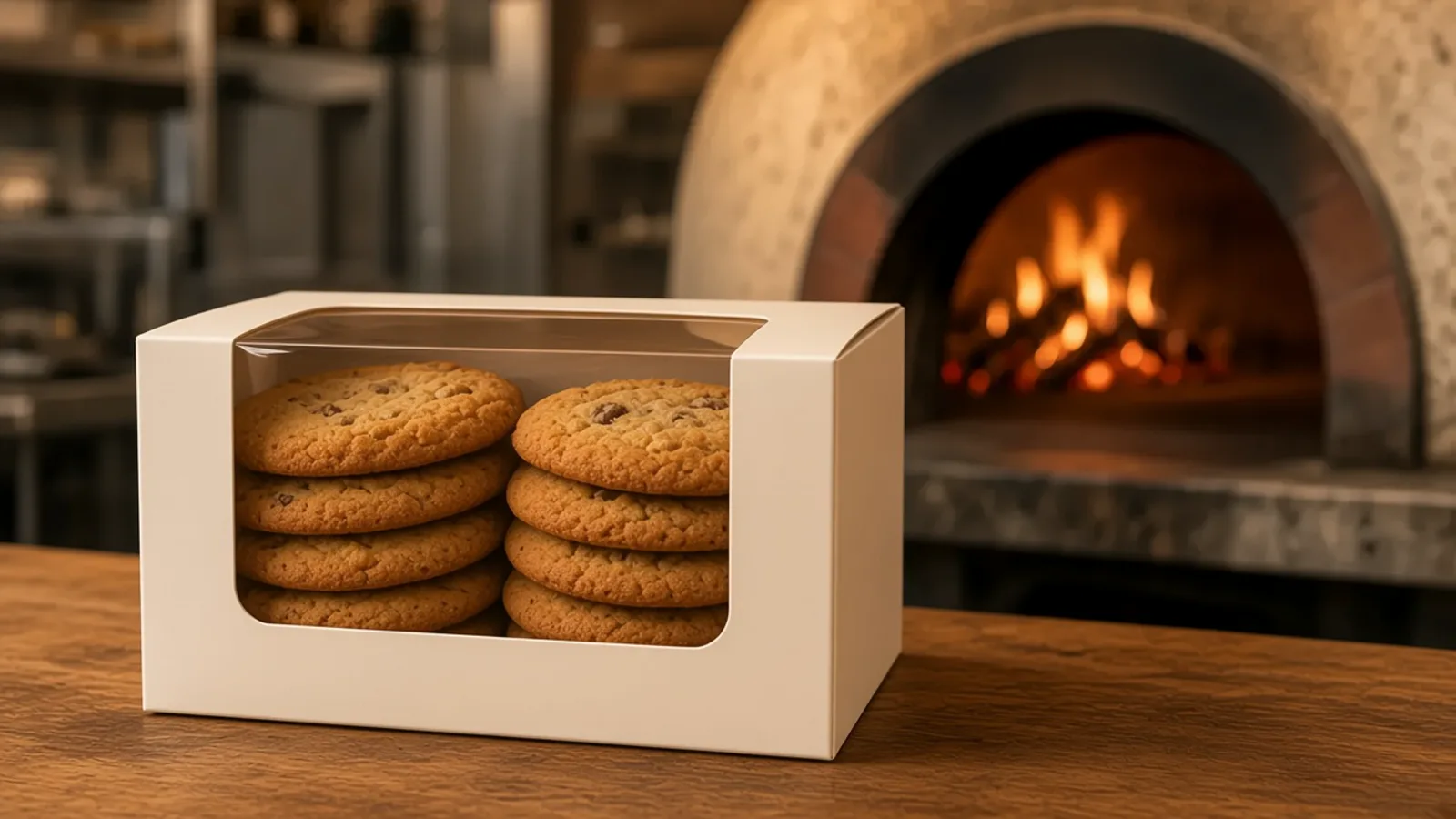
How should cookies be packaged for a gift or a shelf?
The right custom cookie boxes depend on whether the cookie is a gift, a retail SKU, or a bakery counter item. A gift can use a deeper carton and tissue. A retail box has to show the product and survive a stack. A counter box is handled all day and should open and close without tearing. In every case the inside size follows the cookie, not a stock photo of a generic tin.
Start from custom food packaging boxes if you also pack crackers, chocolate, or other baked goods, then come back to the cookie page for the structure you will quote. Cookie packaging is a food question and a size question together.
What size and shape should the carton be?
Measure one cookie, then the stack. A single-layer gift of round cookies needs an inside length and width a little over the cookie diameter, and a depth that includes any liner. A vertical stack of the same cookie needs less floor space and more height, and it needs a structure that does not crush the bottom cookie when cartons are piled. Irregular or iced cookies need more clearance than a plain round.
| Pack | What to measure | Structure to ask about |
|---|---|---|
| Single layer, gift | Diameter and the tallest cookie | Shallow tuck-end or bakery carton |
| Stacked column | Diameter and full stack height | A taller carton that resists top load |
| Assorted box | The largest cookie and the count | A tray or divided insert inside the carton |
| Individual wrap plus carton | The wrapped unit, not the bare cookie | A smaller folding carton or a sleeve |
Bakery cartons in the catalog, including bakery boxes, are the neighboring style when the cookie shares a case with other baked goods. Keep the cookie head term on the cookie page so the quote is for that product.
Which materials and coatings should you ask about?
Ask for food-safe packaging and, when the cookie or an icing contacts the board, a food-safe coating. FDA food-safe is an allowed description when that is the material specified on the order. Say whether the cookie is greasy, iced, or dry. A dry shortbread and a butter cookie do not ask the same thing of the board. The buyer’s guide to food-safe packaging materials lists the questions to put in the quote. It does not replace the material you confirm on the order.
Compostable materials and soy-based inks are available when you want them and the quote specifies them. Recycled, recyclable, or biodegradable board is the same: name it only when it is the board you are ordering. Do not add an approval seal or a standards-body mark on these cartons.
When does a window help, and when does it hurt?
A window lets a shopper see the cookie. It also removes board, so the carton can be easier to crush, and it puts a film between the customer and the food. Use a window when the cookie’s look is the sale and the stack height is low. Skip it when the cookie is fragile, when you need the panel for a full ingredients story, or when the art carries the appetite appeal instead. If you want a window, mark its size on the brief so it is in the dieline rather than cut in later.
- Gift with tissue: often no window, because the open box is the reveal.
- Retail shelf: a window or a large printed photo, not both fighting for the front.
- Shipping to the customer: strength first. A window is optional inside a mailer.
How should gift packaging differ from retail packaging?
A gift carton can use matte or soft-touch lamination, a foil logo, or a simple belly feel of aqueous coating. Embossing a small mark works on a heavier board. Retail cartons are handled more and usually want a coating that resists scuffs, plus a clear front and a side panel that stays readable in a stack. Gloss lamination and varnish are the practical retail finishes. Spot UV on a logo is enough decoration.
Print with offset, digital, or screen printing. Seasonal art that changes every holiday is a digital question. A standing bakery logo that stays all year can be offset. Screen printing is there when you need a dense ink. Optional Pantone or PMS colours matter when the icing colour and the printed accent have to sit together.
How do you keep cookies from breaking in the box?
Breakage is a fit problem more often than a board problem. A cookie that can slide will hit the wall. A stack with no slack will crack when the carton is squeezed. Leave a small clearance around the cookie and a planned stack height, then stop the movement with a liner, a tray, or a band. Say which one you will use. An insert that is not in the quote will not be in the box.
Iced and sandwiched cookies need more height than the biscuit alone. Measure the tallest finished cookie, not the dough. If you stand cookies on edge, the carton depth is the cookie diameter and the width is the thickness times the count. That orientation keeps decorated faces visible and stops them sticking to a lid. If you lay them flat, the bottom cookie carries the weight, so limit the stack or add a sheet between layers and mention that sheet in the brief.
For shipping, the printed carton is not always the outer box. A gift that goes through a carrier may need a mailer outside it. Say so. A retail carton that only travels from your bakery to a shop can be lighter than a carton that is the shipper. The quote changes with that choice. Do not describe a delicate window carton as the thing that will be dropped on a doorstep unless you have planned the outer pack.
What should the panel tell a buyer who cannot open the box?
A closed carton has to answer what is inside, how many, and who baked or packed it. The cookie name and the count do more work than a long story. Allergens and ingredients belong where your own label review says they belong. This guide does not write that copy. Leave a clear area for it so it is not wrapped around a fold. A window can replace a photo of the cookie. It should not replace the name.
Gift and retail can share a structure and change the front line. A gift might say the occasion. A retail carton might say the flavour and the count. Keep the brand in the same place so a reorder is a text change, not a new dieline. That is the difference between a seasonal sell-out and a carton you can print again after the first weekend. If you sell both a two-cookie favor and a dozen-cookie gift, give them two inside sizes that share the same front layout. Write both counts on the brief. A single dieline stretched to cover both will either crush the dozen or leave the favor rattling. The quote can cover both sizes in one request as long as each size has its own measurement and its own quantity.
What do you send when you request a cookie-box quote?
Send the cookie diameter, the stack height, the count per box, whether icing or grease is present, and whether you want a window. Add the quantity. Minimum 50 units, runs of 50–249 quoted individually. Production takes 7–14 business days after the proof is approved. Do not put a price in the artwork. The product page carries any public starting price. This guide does not.
Request a quote — minimum 50 units, runs of 50–249 quoted individually, 7–14 business days. Say gift or retail in the first line so the structure matches the channel.
Frequently asked questions
- Can cookies touch the carton?
- Only when the board and coating are specified as food-safe for that contact. Say so in the quote, including FDA food-safe if that is the spec you need.
- Do I need a window?
- No. Use a window when seeing the cookie makes the sale. Skip it when the cookie is fragile or the printed panel does the work.
- What is the minimum order for cookie boxes?
- Minimum 50 units, runs of 50–249 quoted individually. Production takes 7–14 business days after approval.
- Can the box say the board is compostable?
- Only when the quote specifies compostable materials. Do not add an approval seal or a standards-body mark on the carton.
- Is a rigid gift box required for cookie gifts?
- No. A folding bakery carton is the usual gift. Rigid and magnetic boxes stay quote-only and are a separate brief.
About the author: Xpert Packages Team
Xpert Packages is a custom packaging solutions provider serving businesses across retail, eCommerce, food, cosmetics and other industries. Our team writes these guides from the box styles, materials and finishes in our own catalog.