
By Xpert Packages Team · · Updated
Custom Packaging for Small Brands: A Starter Guide
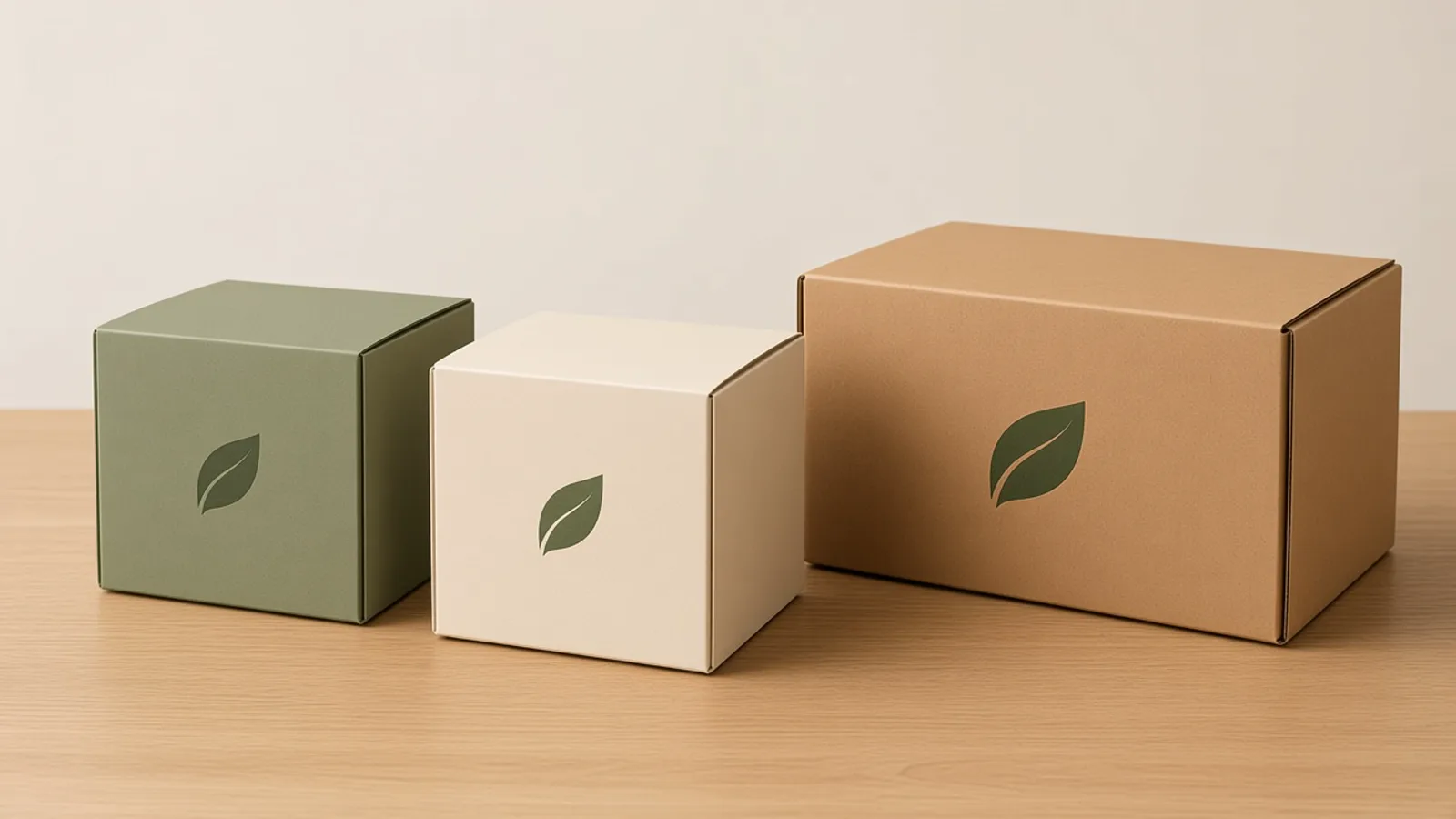
What should a small brand decide before ordering custom packaging?
A first order of custom packaging for your brand is easier when you answer four questions before you ask for a price. What are you packing, how does it reach the customer, what must the outside say, and how many units do you need this time? Those answers pick the structure, the print, and the quantity. They also stop a small team from paying for a box that looks right in a mockup and fails in a mailbox or on a shelf.
Xpert Packages is a custom packaging company. Boxes are made to your size. You do not have to start with a luxury set-up box. Most small brands begin with a folding carton, a mailer, or a simple food carton, then move to a more finished structure once the product and the reorder pattern are clear.
- Product size: length, width, and height of the item, plus any cap, pump, or insert.
- Channel: retail shelf, gift, food service, or shipped to the customer.
- Message: logo, product name, and the few claims you can actually support.
- Quantity: the units you can store and sell, not a guess copied from a larger brand.
Which box style fits a first run?
Start from the job, then open the custom packaging boxes catalog and pick a structure that matches it. A folding carton ships flat, sets up around a bottle, jar, bar, or kit, and gives you printable panels. A mailer closes over tissue and a product for an unboxing. A food carton needs a board and coating that suit the food. A rigid box is a set-up gift box. It is quote-only, with no public price table, so it is rarely the right first purchase for a brand that is still testing a recipe or a scent.
If you sell online, a mailer or a folding carton that also survives the carrier is usually enough. If you sell on a shelf, the front panel matters more than a deep lid. Write down how the customer first sees the product. That sentence is the brief.
| How you sell | Usual first structure | Why it fits a small brand |
|---|---|---|
| Shipped to the customer | Mailer or folding carton | One printed piece can protect and present |
| Retail shelf | Folding carton | Flat shipping into your studio, printable front panel |
| Gift or wedding | Folding carton first; rigid later | Rigid and magnetic builds stay quote-only |
| Food or bakery | Food carton in a food-safe board | Ask about coatings before you print |
How many boxes should a small brand order?
The commercial line is fixed: minimum 50 units, runs of 50–249 quoted individually. You do not have to jump to a thousand units to get a custom size. Order the quantity you can store without crushing the art, and that you expect to sell before a design change. A short run also lets you correct a dieline, a barcode placement, or a colour before you commit to a larger reorder.
Tell the quote the quantity you want priced, and say if a second quantity would help you compare. Do not write “as cheap as possible” in the brief. The minimum is already 50 units. What changes the quote is size, board, print method, finishes, and where the boxes ship.
What should you send with a quote request?
A complete brief is short. Include the product dimensions, the box style you think you want, the quantity, the print (one side or full coverage), and any finish. Add a photo of the product if the shape is awkward. If you have a dieline from a previous supplier, attach it and say it is a reference, not a promise that the same line will be reused.
- Inside size you need, or the product size if you want the team to propose the box.
- Quantity for this order.
- Where the filled or empty boxes need to arrive.
- Artwork status: ready, in progress, or not started.
- Anything the box must not claim.
Leave out invented factory details, approval seals, and review quotes. If you are not sure a finish exists, ask. Offset, digital, and screen printing are available, with foil and spot UV. Optional Pantone or PMS colours can be matched when the artwork needs a specific brand colour rather than a four-colour build.
Which print methods and finishes are worth it on a short run?
Digital printing is the usual fit when the art changes often or the quantity is still small. Offset suits a stable design that uses process colour across large panels. Screen printing is the right question when you want a heavy laydown of ink, a special colour, or coverage on a board that digital and offset are not ideal for. You can combine a print method with foil or spot UV on the logo only, so the rest of the box stays simpler.
Finishes that small brands actually use are matte or gloss lamination, soft-touch lamination, aqueous coating, varnish, embossing, foil, and spot UV. Pick one feature for the first order. A matte carton with a foil logo is easier to proof than a box that also has embossing, spot UV, and a full flood of colour. The guide to custom printed boxes is the place to compare methods once the structure is chosen.
How do materials and eco wording stay honest?
If the product story depends on materials, say what you can support. Compostable materials, soy-based inks, food-safe packaging, food-safe coatings, and FDA food-safe options are claims this catalog allows when they match the board and ink you actually order. Recycled, recyclable, and biodegradable descriptions are allowed in the same way: they describe the material you specify. Do not add an approval seal or a standards-body mark on the box.
Read eco-friendly packaging before you write “green” on the panel. Kraft, compostable board, and soy-based inks are different choices. A recycled-content board can still need a coating that changes how you describe it. Put the material question in the quote so the printed words match the order.
What should you check before you approve the proof?
The digital proof is the last cheap place to fix a mistake. Read it at the size the box will be, not as a thumbnail. Check the product name, the weight or volume if you printed one, the barcode quiet zone, and any line a retailer told you must be visible. Fold the dieline in your mind: a logo that sits on the glue flap or across a tuck will not be seen, and a line that crosses a fold will crack in the print.
Confirm the finish you asked for is the finish on the proof notes. A matte carton and a gloss carton are different orders. If you asked for foil or spot UV on the logo only, the proof should show that limited area, not a flood. If the box is food, confirm the board note matches the food-safe or FDA food-safe spec you requested. If the box is a gift rigid, confirm the quote called it quote-only and that you are not expecting a public price table.
Send one correction list, not a trail of separate emails. Say what must change and what is acceptable. After you approve, production takes 7–14 business days. A change of art after approval is a new proof, not a note in the margin.
What happens after you request a quote?
Production takes 7–14 business days after the proof is approved and the order is confirmed. Shipping time is separate and depends on the destination. You will see a digital proof before production. Check spelling, the legal lines you are required to carry, the barcode, and the dieline folds. A small brand’s most expensive mistake is approving a proof late on a phone screen and discovering a clipped logo after the cartons arrive.
Request a quote — minimum 50 units, runs of 50–249 quoted individually, 7–14 business days. Include the product size and the quantity in that request so the reply matches this guide rather than a generic pack.
Frequently asked questions
- Can a small brand order custom boxes without a large first run?
- Yes. Minimum 50 units, runs of 50–249 quoted individually. Ask for the quantity you can store and sell.
- How long does production take?
- Production takes 7–14 business days after approval. Shipping time is extra and depends on destination.
- Should a new brand start with a rigid gift box?
- Usually no. Rigid and magnetic boxes stay quote-only. A folding carton or mailer is the usual first structure.
- Which print methods can a short run use?
- Offset, digital, and screen printing, plus foil and spot UV. Digital is the common fit when the art is still changing.
- Can the box show an approval seal?
- No. Do not print an outside approval seal or a standards-body mark. Describe the material you ordered, such as compostable board or soy-based ink, only when that is what the quote specifies.
About the author: Xpert Packages Team
Xpert Packages is a custom packaging solutions provider serving businesses across retail, eCommerce, food, cosmetics and other industries. Our team writes these guides from the box styles, materials and finishes in our own catalog.