
By Xpert Packages Team · · Updated
Why Most Custom Boxes Ship Flat (and How to Assemble Them)
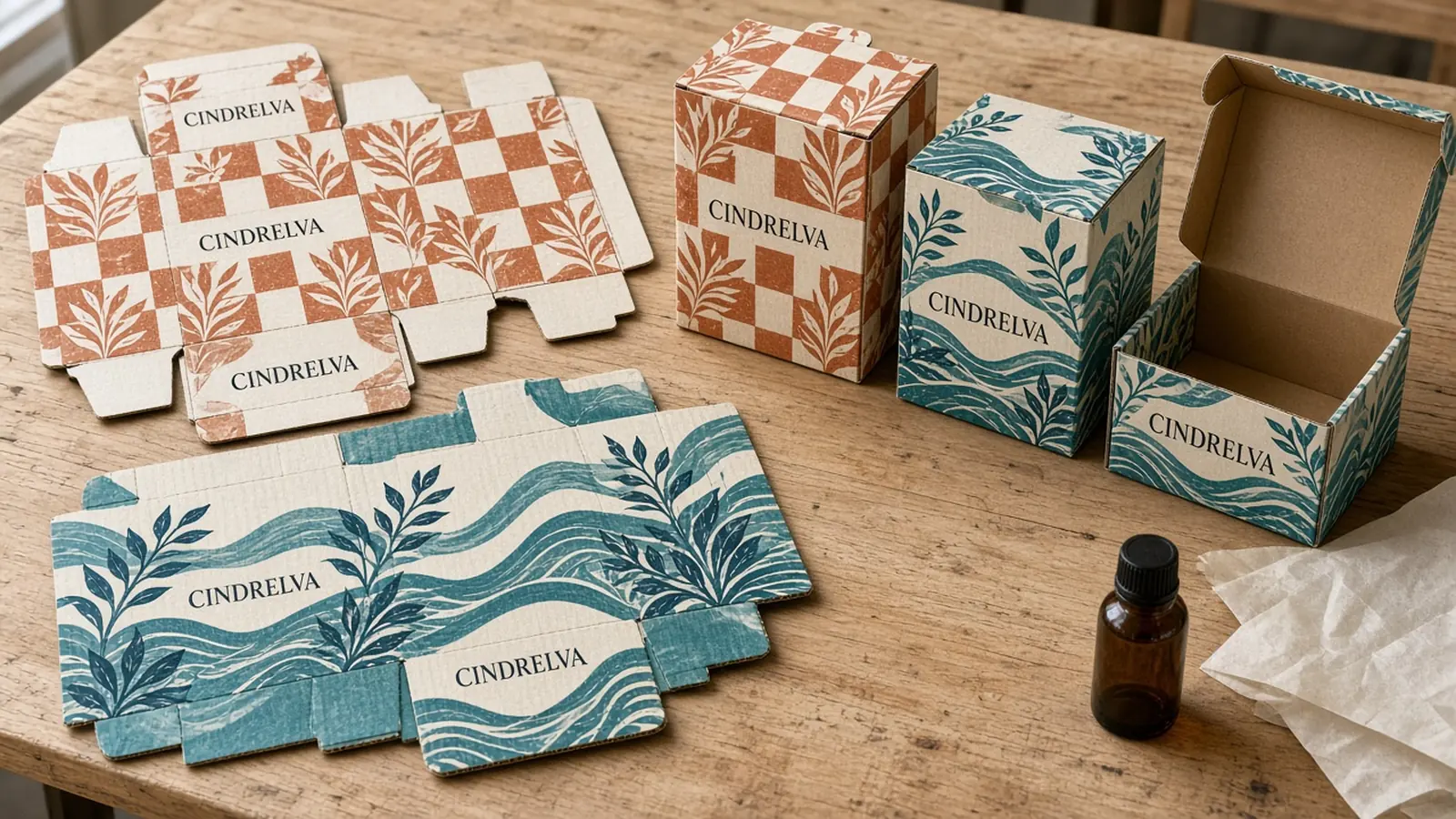
What does it mean when a custom box ships flat?
A box that ships flat leaves production as a die-cut blank, or as a carton that has been folded flat, and is only squared and closed at pack-out. Tuck end boxes, auto-lock bottom boxes and mailer boxes all work this way: you store the run in a compact stack, then fold each box as you pack the product.
That is different from a set-up rigid box. Rigid and magnetic boxes ship set up. They arrive already erected, take more room to store, and are quoted individually. The 29 rigid and assembled styles in our catalog — including magnetic, book-style, drawer, telescope and other wrapped rigid gift boxes — never show a public starting price. For those styles, use this wording: quote on request; rigid boxes ship assembled and are quoted individually.
Our types of packaging boxes overview already notes which families ship flat. This guide explains why most custom runs are packed that way, and walks through erecting the three styles you are most likely to assemble by hand.
Why do most custom boxes ship flat?
Folding cartons ship flat and save storage space; rigid boxes arrive set up and take more room. That storage difference is the practical reason most catalog styles are delivered flat. A stack of blanks or flattened cartons sits on a shelf or pallet until pack-out, and you only erect the boxes you need for that session.
Shipping flat also fits how these styles are made. A tuck end, auto-lock, sleeve, mailer or slotted shipping carton is die-cut from board and can travel as a flat piece or a flattened tube. A rigid box is a wrapped, set-up structure and is not designed to travel that way.
Are rigid boxes more expensive than folding cartons? Generally yes per unit. Rigid and magnetic boxes are priced on quote. Folding cartons, mailers and shipping cartons keep estimated starting prices on their product pages. We do not publish a savings percentage, a freight figure or an assembly time: those depend on the style, the size and how you pack. What we can say is that the ship-flat styles in this guide show a public starting price, and the assembled rigid styles do not.
Which boxes ship flat, and which arrive assembled?
Use this split when you plan storage and pricing:
| Family | How it arrives | Pricing |
|---|---|---|
| Folding cartons (tuck end, auto-lock, seal end, sleeves and product boxes) | Ship flat; folded when you pack | Estimated starting prices on the product pages |
| Mailer boxes | Ship flat; folded and locked by hand | Estimated starting prices on the product pages |
| Shipping boxes (RSC, FOL and HSC) | Ship flat; taped or folded at packing | Estimated starting prices on the product pages |
| Rigid and assembled boxes (magnetic, book-style, drawer, telescope and other wrapped rigid styles) | Arrive set up | Quote on request; quoted individually |
Mailers, tuck end cartons and auto-lock cartons ship flat and are folded when you pack. Shipping boxes are slotted corrugated cartons (RSC, FOL, HSC), not e-commerce mailers, and they also arrive flat. If you are choosing between a mailer and a shipping carton, see mailer boxes vs shipping boxes. For a deeper comparison of folding cartons and rigid boxes, see rigid boxes vs folding cartons.
How do I assemble a tuck end carton?
A tuck end carton folds flat and is quick to erect. The ends tuck closed by hand, with no tape on the top or bottom. Our tuck end boxes are the everyday retail carton for light products, and they currently show From $0.53 / unit at 1,000 units.
- Take one carton from the stack and square it so the sides stand and the opening is a rectangle.
- Fold the two short dust flaps in at the bottom.
- Tuck the bottom end flap into the opening until it sits flush.
- Load the product, and an insert if you are using one.
- Fold the top dust flaps in and tuck the top flap closed.
The same motion applies to reverse tuck and straight tuck cartons; only the side the tucks come from changes. If you are still choosing among those styles, see our guide to folding carton box styles.
How do I assemble an auto-lock bottom carton?
An auto-lock bottom, also called a crash-lock or snap-lock bottom, is built so the base locks in one move. Our auto-lock bottom boxes are folding cartons whose base locks when the carton is squared, without tape. They currently show From $0.59 / unit at 1,000 units.
- Hold the flattened carton at the sides and square it, pushing the walls into a rectangle.
- As the carton opens, the pre-folded bottom panels lock together to form the base. Press the base flat from the inside so the lock sits fully home.
- Stand the carton on that locked base. You should not need tape on the bottom.
- Load the product, then close the top with the tuck or other top style specified on your order.
If the bottom does not lock, the carton is not yet fully squared, or a panel is caught. Flatten it and square it again rather than adding tape to a half-formed lock. These cartons are not rigid boxes and not mailers; they are still a folding carton that ships flat.
How do I assemble a mailer box?
A mailer folds and locks by hand, usually with little or no tape. Our mailer boxes are roll-end and self-locking e-commerce mailers. Mailer boxes are primarily single-wall corrugated, commonly E-flute for small and medium mailers and B-flute for larger or heavier mailers. They currently show From $2.08 / unit at 1,000 units.
- Start with the flat blank, printed side out, and fold the side walls up along the crease lines.
- Fold in the dust flaps or side flaps so they lock or sit against the walls and give the box its rectangular shape.
- Place the product in the base, with an insert or tissue if you specified one.
- Close the hinged lid and tuck or lock the front flap so the mailer stays shut. Most self-locking mailers need little or no tape.
A shipping box is a different structure: RSC, FOL, and HSC corrugated shipping cartons, which are taped or folded at packing rather than locked like a mailer. Use RSC for general fulfillment, FOL when extra flap overlap is needed, and HSC for trays with a separate lid. Shipping boxes currently show From $1.10 / unit at 1,000 units. Leave space on the outside of a mailer or shipper for the shipping label so it does not cover key artwork.
How do I order boxes that ship flat?
These are the starting prices currently shown on the ship-flat product pages linked in this guide:
| Style | Starting price | How you assemble it |
|---|---|---|
| Tuck end boxes | From $0.53 / unit at 1,000 units | Square, fold the dust flaps, tuck the ends |
| Auto-lock bottom boxes | From $0.59 / unit at 1,000 units | Square the carton; the base locks without tape |
| Mailer boxes | From $2.08 / unit at 1,000 units | Fold the walls, place the product, close and lock the lid |
| Shipping boxes | From $1.10 / unit at 1,000 units | Fold and tape, or fold to the specified RSC, FOL or HSC close |
Estimated price per unit, not a quote. Your written quote is based on your exact specifications and includes setup, die, plate and US shipping. Quantity rows for 50–249 show Quote on request. Final price depends on specifications and quantity. Rigid and assembled styles do not appear in this table; they are quoted individually and ship set up.
| Include | Why it matters |
|---|---|
| Style (tuck end, auto-lock, mailer or shipping carton) | Sets the blank and the way you will assemble it |
| Product dimensions (L × W × H) | Every box is made to your exact size |
| Whether the box ships on its own or inside another carton | Separates a mailer or shipping box from a retail folding carton |
| Print and finish | Confirmed and priced on your quote |
| Quantity and target date | Sets the price tier and the schedule |
Our minimum order is 50 units, and runs of 50–249 are quoted individually. Before production we provide a digital proof, such as a dieline or 3D preview with your artwork, where technically supported. Production typically takes 7–14 business days after proof approval. Rush production in 5 business days for 25% extra. Shipping time varies by destination.
When you are ready, Get a Custom Quote or Get a Quick Quote. Send the style, the product dimensions, the quantity and any print or finish notes, and our sales team will reply with a written quote.
Frequently asked questions
- Why do custom boxes ship flat?
- Folding cartons, mailers and shipping cartons are die-cut so they can travel and store as flat blanks or flattened cartons, then be folded at packing. This saves storage space compared with set-up rigid boxes. We do not publish a savings percentage or a freight figure; those depend on the style, the size and how you pack.
- Which custom boxes arrive assembled?
- Rigid and magnetic boxes ship set up. The 29 rigid and assembled styles in our catalog — including magnetic, book-style, drawer and other wrapped rigid gift boxes — arrive assembled and are quoted individually. Folding cartons, mailers and shipping boxes ship flat.
- How do I assemble a tuck end box?
- Square the carton, fold in the bottom dust flaps, tuck the bottom closed, load the product, then tuck the top closed. The ends close by hand and do not need tape.
- How does an auto-lock bottom work?
- When you square the carton, the pre-folded bottom panels lock together to form the base, without tape. Stand the carton on that locked base, load the product, and close the top as specified on your order.
- Do mailer boxes need tape?
- Most self-locking mailers need little or no tape. Fold the walls up from the blank, place the product, and close the hinged lid so the front flap tucks or locks. A slotted shipping carton (RSC, FOL or HSC) is taped or folded instead.
- What is the minimum order and lead time for boxes that ship flat?
- Our minimum order is 50 units, and runs of 50–249 are quoted individually. Production typically takes 7–14 business days after proof approval. Rush production in 5 business days for 25% extra. Shipping time varies by destination.
About the author: Xpert Packages Team
Xpert Packages is a custom packaging solutions provider serving businesses across retail, eCommerce, food, cosmetics and other industries. Our team writes these guides from the box styles, materials and finishes in our own catalog.