
By Xpert Packages Team · · Updated
Mailer Boxes vs Shipping Boxes: Which Should You Use?
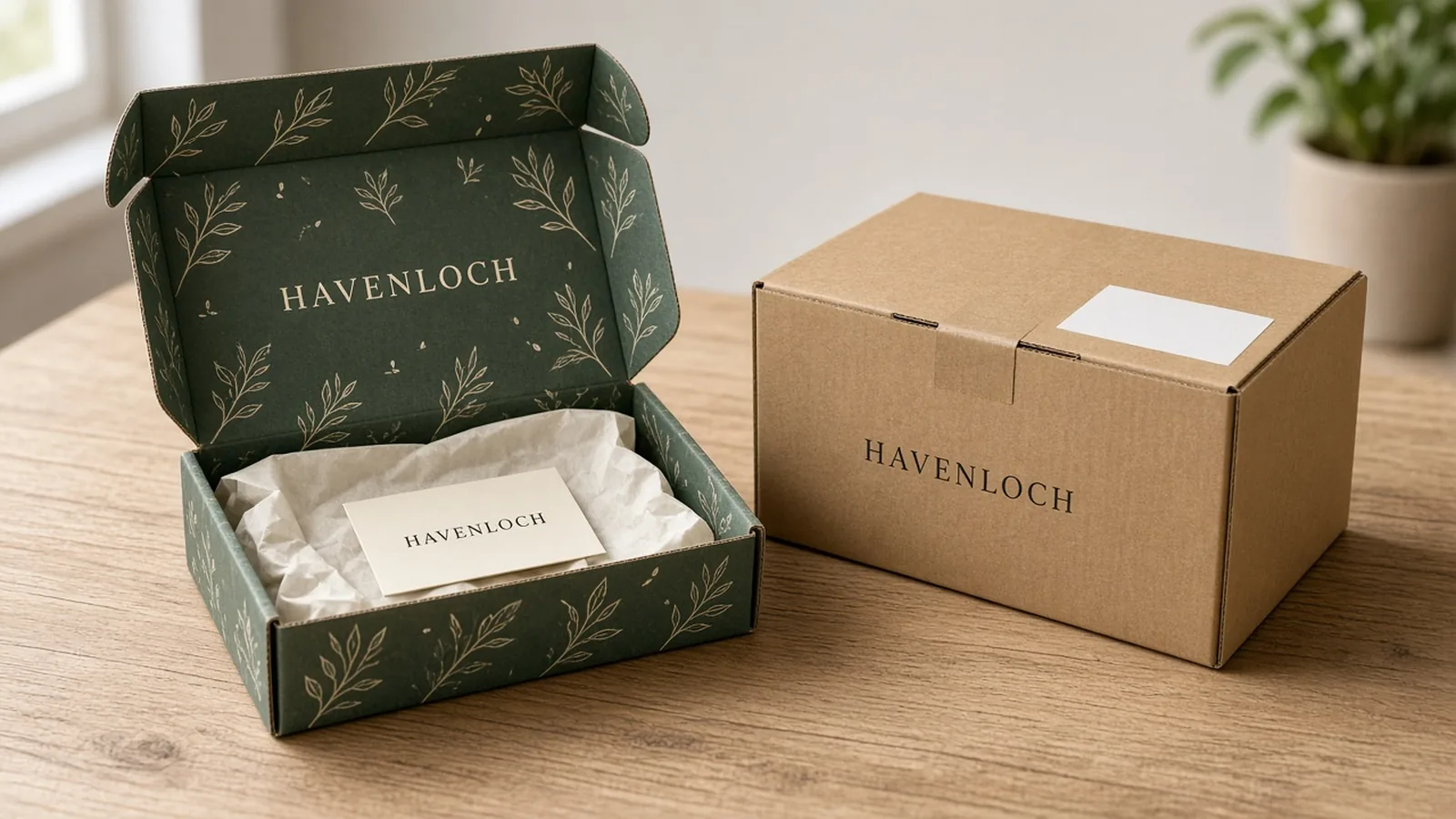
What is the difference between a mailer box and a shipping box?
Both are corrugated transit packs. The difference is what the box is for once it leaves your warehouse.
A mailer box is a one-piece, self-closing box with a hinged lid. It is built to travel as the package the customer receives and opens, which is why mailers are common for eCommerce orders, subscription kits and gift sets. For styles, materials and sizing, see What Is a Mailer Box?.
A shipping box is a corrugated slotted carton. The usual style in this comparison is a regular slotted carton (RSC): flaps fold in, typically meet in the middle, and are sealed, usually with tape. Shipping cartons are the everyday choice for fulfillment, warehouse packing, bulk shipments and heavier goods. They can be the only carton in transit, or an outer carton around products already in retail packs.
A mailer is designed as a branded opening experience. A shipping carton is designed first as a transit pack. Both can ship without a second outer carton, but they are not interchangeable.
How is each box built?
Mailer box structure
A mailer is a one-piece board blank that folds into shape, with the lid attached along one edge. The lid tucks in at the front, and side flaps lock the box closed, so it usually needs little or no tape at packing. The mailer boxes product page lists roll-end and self-locking e-commerce mailers.
The authoritative material is corrugated board. Mailer boxes are primarily single-wall corrugated, commonly E-flute for small and medium mailers and B-flute for larger or heavier mailers. Kraft is a corrugated liner option, not a separate primary material family.
Shipping box structure
In the usual RSC style, flaps at each end fold in, the outer flaps typically meet in the middle, and the carton is taped shut. That closure is fast on a packing bench or fulfillment line, and it is easy to reseal if a carton is opened for a check.
The shipping boxes product page lists RSC, FOL and HSC corrugated shipping cartons. The comparison most buyers mean by “shipping box” is the RSC carton. FOL and HSC are other slotted-carton styles on that same page; confirm the style that fits your pack when you request a quote.
Both mailers and shipping cartons are typically supplied flat and assembled at packing time.
How do they compare on protection?
Both styles use corrugated board, so both can protect a product in transit. The right choice depends on the product, the pack size and how the box will be handled — not on a single “stronger box” rule.
Mailers fit small to medium direct-to-customer orders when the same box must protect the product and look presentable on arrival. E-flute is commonly used for smaller mailers where a smoother print surface matters. B-flute is commonly used for larger or heavier mailers when more cushioning is needed. A custom insert can hold a bottle, kit or fragile item in place; include it in your quote request.
Shipping cartons are the usual choice when the load is bulk, heavier, or packed in a warehouse or fulfillment flow. The RSC stacks and seals in a predictable way. It may hold several units, or sit as an outer pack around retail cartons. Confirm the board on your quote for the size and weight you actually ship. This guide does not publish weight limits or extra board grades.
If the product is large, dense or ships in multiples, start with a shipping carton. If it is a single direct-to-customer order that should arrive like a brand pack, start with a mailer.
What does shipping a product in its own box mean?
Shipping a product in its own box means the box you pack is also the carton that travels through the shipping network. There is no second outer shipper to add or discard. Both mailer boxes and shipping boxes can work this way.
With a mailer, the branded pack and the transit carton are the same thing. One box protects the product and is the first thing the customer sees. Because the outside will be handled, labeled and stacked, leave a clear area for the shipping label and avoid placing key artwork where the label will go.
With a shipping carton, the RSC (or another slotted carton) is the transit pack. It may contain products, or retail cartons that are not meant to travel on their own. The outside can be plain, or it can carry a logo and handling marks. Presentation on opening is usually secondary to a clean, secure seal.
If you already have a folding carton for the shelf, a shipping box is often the outer transit pack. If you want one box to do both jobs — travel and unboxing — a mailer is usually the better starting point.
How does unboxing differ?
A mailer is built around the opening. The hinged lid lifts like a gift, and the inside of the lid can carry a thank-you message, a pattern or short instructions. Mailers can be printed on the outside, the inside or both. Finishes we offer include matte, gloss and soft-touch lamination, foil, spot UV, embossing, varnish and aqueous coating. Confirm the combination for your style on the product page and on your quote.
A shipping carton is built around packing and transit. Opening is usually a matter of releasing the tape and folding the flaps back — the right experience for a warehouse receipt, a bulk order, or a pack whose presentation already sits in a retail carton inside. You can still print a shipping carton, but most brands keep the design simpler: a logo, a color and handling information, rather than an inside-lid reveal.
If social unboxing, a gift-like arrival or a subscription kit matters, choose a mailer. If the box will be opened in a stockroom, or the product already has its own presentation pack, choose a shipping carton.
What drives the cost of each box?
There is no single mailer or shipping-box price. Price depends on dimensions, material, structure, printing, number of colors, finishes, inserts, quantity, production and shipping requirements. Final price depends on specifications and quantity.
The same commercial rules apply to both styles. Every box is made to your exact size, with no size limit and no standard sizes. The published position is minimum 50 units, runs of 50–249 quoted individually. Product pages show estimated starting prices at larger quantities; those figures are estimated prices per unit, not a quote.
Cost often differs because the jobs differ:
- Size and board. A larger carton uses more material. Mailers commonly use E-flute or B-flute. Shipping cartons are quoted for the corrugated board that fits the load.
- Structure. A self-closing mailer and a slotted shipping carton are different conversions.
- Printing. Offset, digital, foil, spot UV and screen printing are offered, with optional PMS spot color. Mailers are more often printed on several panels, and sometimes inside as well. A fulfillment shipping carton may use fewer printed panels.
- Finishes. Matte, gloss, soft-touch, foil, spot UV, embossing, varnish and aqueous coating are available, and options vary by product. Finishes are used more often on mailers because the customer handles the box as part of the brand.
- Inserts and quantity. Custom inserts are priced on your quote. Larger runs usually reduce the price per unit. Runs of 50–249 are quoted individually.
For current estimated starting prices, see How Much Do Custom Printed Boxes Cost? and the mailer boxes and shipping boxes pages. For how small runs are quoted, see What Is the Minimum Order Quantity for Custom Boxes?.
Rigid and assembled gift boxes ship assembled and are quoted individually at any quantity. They are not a substitute for a mailer or an RSC shipping carton.
When should you use a mailer box or a shipping box?
Choose a mailer box when
- You ship a single order directly to a customer and want the box itself to carry the brand.
- The arrival should feel like a gift, a subscription kit, a sample set or a product launch pack.
- You want one box to protect the product and to be opened by the customer, with no outer shipper.
- Inside printing, a hinged-lid reveal or a custom insert is part of the experience.
- The product is in the small-to-medium range a mailer is typically designed to hold. Apparel, cosmetics, accessories, books, candles, electronics accessories and curated gift sets are common examples.
Choose a shipping box when
- You are packing for fulfillment, a warehouse or a bulk shipment rather than a single gift-like arrival.
- The load is heavier, larger or contains several units.
- A retail carton or other presentation pack already sits inside, and you need an outer transit carton.
- Packing speed and a tape-sealed RSC (or another slotted carton) fit the packing line better than a self-closing mailer.
- Presentation at opening matters less than a secure, stackable carton.
If you are unsure, describe how the product is sold and shipped when you request a quote: direct to the customer, through a fulfillment center, or as a bulk shipment.
A poly mailer is a different format — a flexible bag, not a corrugated box — and is the right comparison only for soft goods that do not need crush protection. That contrast is covered in What Is a Mailer Box?.
How do mailer boxes and shipping boxes compare at a glance?
| Mailer box | Shipping box (RSC carton) | |
|---|---|---|
| Structure | One-piece box with a hinged lid; roll-end or self-locking styles | Slotted carton; flaps typically meet in the middle. FOL and HSC styles are also listed on the shipping boxes page |
| Closure | Lid tucks in; side flaps lock; usually little or no tape | Flaps folded and typically sealed with tape |
| Material | Primarily single-wall corrugated; commonly E-flute for small/medium and B-flute for larger/heavier mailers. Kraft is a liner option | Corrugated board, confirmed on your quote for the size and load |
| Ships in its own box | Yes — the mailer is the transit carton and the pack the customer opens | Yes — the carton is the transit pack; it may hold products or retail cartons |
| Unboxing | Hinged lid opens like a gift; can be printed inside and out | Functional opening; presentation is usually secondary |
| Typical use | Direct-to-customer orders, subscription kits, gift and PR packs | Fulfillment, warehouse, bulk or heavier shipments |
| How it is supplied | Typically flat, folded at packing | Typically flat, assembled at packing |
| How price is shown | Estimated starting price on the product page; runs of 50–249 quoted individually; final price depends on specifications and quantity | Same commercial rule; print coverage, finishes, size and board are the usual drivers |
What is the minimum order and lead time?
For both styles, the published position is minimum 50 units, runs of 50–249 quoted individually. Final minimum quantity may vary based on packaging type and specifications, so the number on your written quote is the one that applies. Product pages show estimated prices from 250 units upward. Orders of 50–249 units are marked quote on request and priced on your exact size, material, print and finish.
Production typically takes 7–14 business days after proof approval. Shipping time varies by destination. Before production, you review a digital proof where technically supported. Digital previews help you review your packaging configuration before finalizing your order. Final production appearance may vary based on materials, printing and finishing.
How do I request a quote?
Choose the style that matches how the order will be packed and opened — a mailer box for branded direct-to-customer shipping, or a shipping box for fulfillment and bulk transit — then request a quote with inside dimensions (length × width × height), the box style or a short description of how the product ships, quantity, printing (including inside print on a mailer), number of colors, any PMS spot color, finishes and any custom insert.
The written quote is the price that applies to your order.
Frequently asked questions
- What is the difference between a mailer box and a shipping box?
- A mailer box is a self-closing corrugated box with a hinged lid, built to reach the customer as the package they open. A shipping box is a corrugated slotted carton, usually an RSC, used for fulfillment, bulk or heavier shipments. Both can ship without an outer carton.
- Can a mailer box ship without an outer carton?
- Yes. A mailer is designed to travel as its own box. Leave space on the outside for a shipping label. A shipping carton can also travel without a second outer box; it is often used as the transit pack around products or retail cartons.
- Which is stronger, a mailer box or a shipping box?
- There is no single answer. Both are corrugated. Mailers commonly use E-flute for small and medium sizes and B-flute for larger or heavier mailers. Shipping cartons are quoted for the board that fits the load. Confirm the build on your quote.
- Do mailer boxes cost more than shipping boxes?
- Not as a fixed rule. Price depends on dimensions, material, structure, printing, number of colors, finishes, inserts, quantity, production and shipping requirements. Mailers are more often printed on several panels, and sometimes inside, which can change the quote. See current estimated starting prices on the product pages and in our custom box cost guide.
- What is the minimum order for custom mailer or shipping boxes?
- Minimum 50 units, runs of 50–249 quoted individually. Final minimum quantity may vary based on packaging type and specifications. The same minimum applies to both styles.
- How long does it take to produce custom mailer or shipping boxes?
- Production typically takes 7–14 business days after proof approval. Shipping time varies by destination.
About the author: Xpert Packages Team
Xpert Packages is a custom packaging solutions provider serving businesses across retail, eCommerce, food, cosmetics and other industries. Our team writes these guides from the box styles, materials and finishes in our own catalog.