
By Xpert Packages Team · · Updated
Eco-Friendly Packaging Materials: Kraft, Compostable, Soy
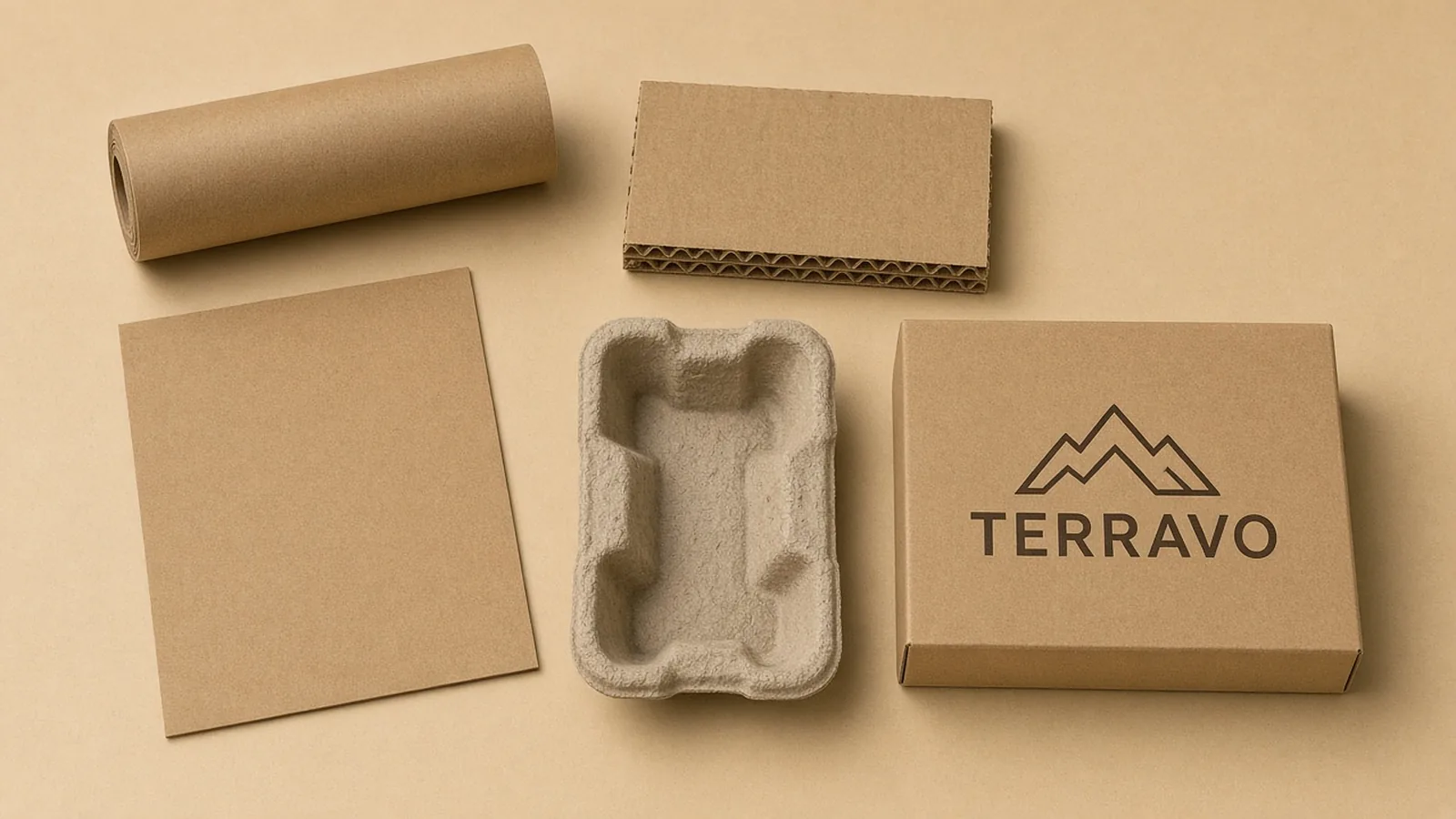
What makes a packaging material eco-friendly?
If you are planning eco friendly packaging boxes, the material is only part of the decision. Ink, box size and how the customer will dispose of the pack all matter. This guide compares the options Xpert Packages offers, explains where each works best, and shows how to brief a quote without overclaiming on your own packaging.
As a custom packaging company, we keep our claims simple: we offer compostable materials, soy-based inks and food-safe options. Every claim on your box should be specific and match what you can document.
There is no single definition. For most brands, "eco-friendly" packaging means some mix of:
- Less material: a box that fits the product, with no oversized carton or excess fill.
- Better end of life: materials that can be composted where the right facilities exist.
- Lower-impact inks: soy-based inks instead of standard inks.
- Plain, minimal design: less ink coverage and simpler decoration.
Choosing two or three of these together usually achieves more than chasing one label.
Which eco-friendly packaging materials can you choose?
Kraft board
Kraft is unbleached paperboard with a natural brown color. It suits brands that want an earthy, handmade look, and it often needs less ink because the board color does part of the design work. Kraft is used for mailers, food boxes, apparel boxes and gift packaging.
Compostable board
Compostable board is designed to break down in composting conditions. It is a strong fit for single-use packaging such as takeaway food, where the box is used once and thrown away. Tell customers to check local composting options rather than promising a home-compost result.
Corrugated board
Corrugated board has a fluted middle layer between liners, which makes it strong for shipping. Using the right flute and a box sized to the product reduces damage and returns, which also cuts waste. See kraft vs cardboard vs corrugated for the structural differences.
Soy-based inks
Soy-based inks are made with soybean oil in place of standard petroleum-based oils. They print well on paperboard and kraft and are a simple swap for brands that want lower-impact printing.
How do these materials compare?
| Option | What it is | Best for | Look and feel | Things to check |
|---|---|---|---|---|
| Kraft board | Unbleached paperboard | Mailers, food, apparel, gifts | Natural brown, matte | Bright colors print darker on brown |
| Compostable board | Board made to compost | Single-use food packaging | Plain, natural | Customer access to composting |
| Corrugated board | Fluted shipping board | E-commerce, heavy items | Sturdy, structural | Flute choice for weight |
| Soy-based inks | Inks with soybean oil | Any printed box | Similar to standard inks | Confirm with your quote |
| Right-sized box | Made to exact dimensions | Every product | Neat, snug fit | Accurate product measurements |
Why does box size matter for sustainability?
Every Xpert Packages box is made to the customer's exact size, so you are never forced into a box that is too big. A snug box:
- uses less board,
- needs little or no void fill,
- packs more efficiently into shipping cartons,
- protects the product better, so fewer items are damaged and replaced.
To get this right, measure carefully. Our guide to how to measure box dimensions walks through length, width and depth.
Which design choices fit an eco-friendly box?
Heavy ink coverage works against a natural look. Lighter options include:
- A plain matte surface that lets the board show through.
- Soy-based inks with low coverage.
- Single-color or screen-printed logos on kraft.
If you need a premium touch, a small foil or spot UV logo on kraft can look striking while keeping ink coverage low.
How do you apply this to food packaging?
Food brands often get the biggest gain from eco-friendly choices because takeaway boxes are single use. Our custom pizza boxes and custom burger boxes can be specified with food-safe board, compostable options and soy-based inks. Ask about food-safe packaging options when grease or moisture is a concern.
What should you say about eco-friendly packaging on the box?
Keep on-pack claims specific and true. Good examples:
- "Printed with soy-based inks."
- "Compostable where facilities exist."
- "Made to fit — less material, less filler."
Avoid broad words like "green" or "planet-safe" on their own; specific claims are clearer and easier to stand behind. If you are planning a wider change, our page on switching to sustainable packaging covers the full range.
Which mistakes should you avoid with eco-friendly packaging?
- Oversizing the box. A box that is too large wastes board and needs filler. Every box is made to your exact size, so measure first.
- Mixing materials that are hard to separate. Plastic windows, heavy laminations and glued-on extras can make a box harder to recycle. Choose them only when they add real value.
- Making vague claims. Say exactly what the material is, such as "recyclable kraft board", rather than "green" or "eco".
- Forgetting the insert. A paperboard insert keeps the whole pack in one material stream.
- Choosing looks over protection. A box that fails in transit creates a second shipment, which is worse for the environment than a slightly stronger board.
Eco-friendly packaging checklist
Before you approve your order, check that:
- The box is sized to the product with minimal empty space.
- The material choice (kraft, recycled board, corrugated or compostable board) matches how the box will be used.
- Inks and finishes suit your eco message, for example soy-based inks with a light varnish or aqueous coating.
- Any claim printed on the box names the material and is accurate for your box style.
- Disposal instructions are short and clear, such as "Recycle with paper and card".
For wider context, see sustainable packaging trends for 2026.
How do you choose an eco-friendly material, step by step?
Picking a greener box is easier when you decide in a set order rather than starting with the look.
- Protection first. Decide how much strength the product needs. Fragile or heavy items usually need corrugated board; light retail items often suit paperboard.
- Pick the board. Kraft board gives a natural look, and recycled board is an option for many styles. Ask which recycled or recyclable stocks suit your box style.
- Keep print light. Use soy inks and keep ink coverage moderate, especially on kraft, where the natural board can be part of the design.
- Choose the finish carefully. An aqueous coating or varnish is often a better fit for recyclability than heavy plastic laminates. Ask before adding soft-touch or gloss films.
- Right-size it. Every box is made to your exact size, which cuts void fill and wasted board.
Eco checklist before you order:
- Board type confirmed (kraft, recycled or standard paperboard)
- Finish chosen with end-of-life in mind
- Inserts made from paperboard rather than plastic where possible
- Box size matched to the product, not to a stock size
- Disposal note printed on the box, such as "please recycle"
If you are switching from an existing box, compare the old and new versions side by side before a full order. Check that the new board still protects the product in transit, that colors print well on kraft or recycled stock, and that the closure holds firmly. Ask your team how customers usually dispose of the box, then print a short, honest note that matches. A simple line such as "recyclable where facilities exist" is clearer than vague green wording.
Small choices like these add up and make the final box easier for your customers to recycle.
How do I request a quote?
Share your product size, box style and the materials or inks you prefer. Request a quote — minimum 50 units, runs of 50–249 quoted individually, 7–14 business days. Start your quote.
Frequently asked questions
- What is the most eco-friendly packaging material?
- It depends on the product. Kraft and compostable board are common choices, and a right-sized box often saves more material than any single swap.
- Is kraft packaging compostable?
- Ask for compostable board specifically when you request a quote. Kraft describes the board color and type, not its end-of-life.
- Do soy-based inks look different?
- They print well on paperboard and kraft. A proof shows you the final color before production.
- Can eco-friendly boxes be food-safe?
- Yes. We offer food-safe options for food packaging; tell us the food type so we can recommend the right food-safe option.
- What is the minimum order for eco-friendly boxes?
- Minimum 50 units, runs of 50–249 quoted individually.
About the author: Xpert Packages Team
Xpert Packages is a custom packaging solutions provider serving businesses across retail, eCommerce, food, cosmetics and other industries. Our team writes these guides from the box styles, materials and finishes in our own catalog.